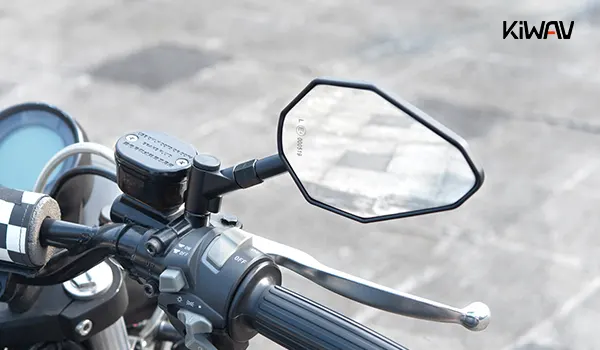


Motorcycle mirrors are not just a required accessory or a styling choice. They are your primary source of rear visibility—and a critical factor in how safely and confidently you ride. From daily commuting to long-distance touring and custom builds, the right mirrors help you monitor traffic, make better decisions, and reduce risk in real-world riding conditions.
This guide brings together everything you need to understand, choose, install, and optimize motorcycle mirrors.
Why Motorcycle Mirrors Matter
Before comparing designs or mounting styles, it's important to understand the role mirrors play in riding awareness and safety.
The Role of Motorcycle Mirrors in Riding
When riders talk about safety, helmets and brakes usually come first. Mirrors rarely get the same attention—until the moment they don't work as expected. A blurry reflection, a poorly placed mirror, or a design chosen only for looks can quietly affect how you ride every single mile.
Motorcycle mirrors are not just accessories. They play a critical role in situational awareness, reaction time, riding confidence, and even the overall visual balance of the bike. Understanding this role is the first step toward choosing the right mirror—not just a popular one.
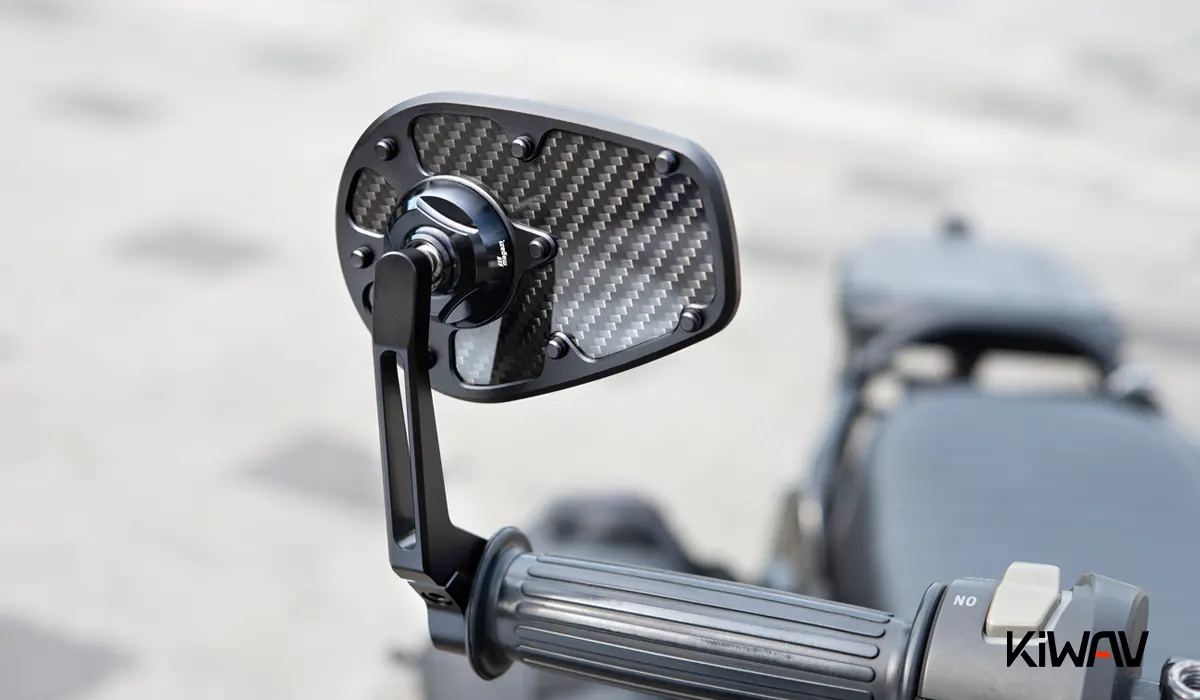
Why High-Quality Motorcycle Mirrors Matter
Motorcycle riders rely on rearview mirrors more than most people realize. Unlike cars, motorcycles lack structural protection and blind-spot warning systems. A rider’s awareness of surrounding traffic depends heavily on one thing: clear, stable, and reliable rearward vision.
Yet many motorcycles—especially when modified or used at highway speeds—are equipped with mirrors that vibrate, blur, or distort the view behind them. This article explains why high-quality motorcycle mirrors matter, how poor mirrors compromise safety and durability, and what technical factors separate a truly stable mirror from an cheap one.
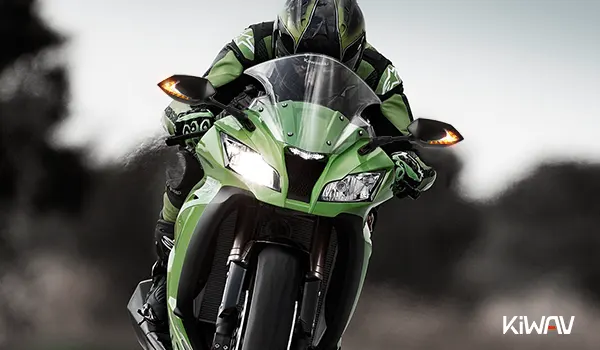
Why Some Mirrors Feel Better in Daily Riding
Features that actually improve comfort, clarity, and confidence.
At first glance, a mirror is a simple component with a singular job: reflecting the road behind you. However, seasoned riders know that after hours in the saddle—navigating dense urban traffic or cruising at highway speeds—the gap between a basic mirror and a well-engineered one becomes clear.
The truth is, some mirrors simply feel better to live with than others. This difference rarely comes down to the mounting style alone; instead, it is found in the thoughtful functional details that quietly support your awareness and convenience. Beyond simple visibility, these integrated features transform a passive reflection into an active riding tool that improves your comfort and confidence every day.

Why Motorcycle Mirrors Fail Riders: 10 Real-World Problems and the Design Solutions That Actually Work
Most riders don’t think about their mirrors until they fail—usually at 100 km/h on a busy highway. From vibrating images to “shoulder-only” views, the frustrations are real. Across rider forums, owner groups, and real-world use, the same failures appear again and again—not because riders choose poorly, but because mirror design is frequently optimized for cost or appearance rather than riding physics. We’ve analyzed the 10 most common reasons why mirrors fail riders and, more importantly, the specific design solutions that turn a frustrating ride into a confident one.
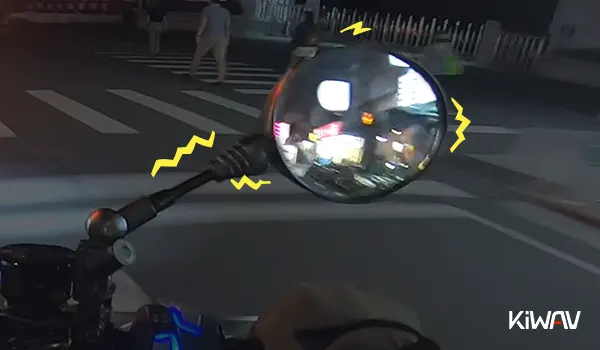
Why Motorcycle Mirrors Vibrate
Understanding the Real Causes Behind Blurred Rearward Vision
Motorcycle mirrors rarely vibrate because of a single defect. In most cases, vibration occurs when engine vibration, mounting structure, and mirror design interact as a system.
Understanding the root cause of mirror vibration is the first step toward achieving a clear and stable rearward view.
Choosing the Right Motorcycle Mirror
Replacing mirrors isn't just about appearance. Your riding style, bike setup, and priorities all influence which mirror works best.
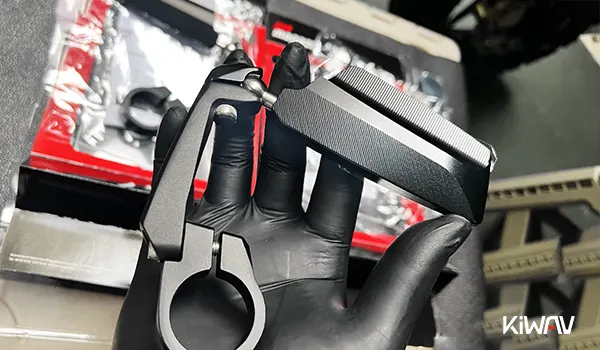
Replacing Your Motorcycle Mirrors: Everything You Need to Know Before You Buy
Replacing motorcycle mirrors is one of the easiest and most common upgrades riders consider—yet it is also one of the most misunderstood. Many riders start with aesthetics, only to realize later that visibility, vibration, durability or compatibility issues make the mirror unsuitable for daily riding.

Smart Motorcycle/Ebike Mirror Advisor: Find Your Perfect Match
Choosing motorcycle mirrors shouldn't feel like a guessing game. Instead of scrolling through endless product pages, you need a clear path to the setup that best fits your environment. That's why KiWAV created this Smart Advisor to help you move past the surface-level aesthetics and identify the functional profile that aligns with your real-world riding needs.
This guide provides a logical decision-making framework. By answering a few straightforward questions about how you ride and what you care, you can narrow down the ideal mirror type for your journey. Once you've defined your profile, you can then proceed to our detailed compatibility list to identify the specific fitment options for your motorcycle's make and model.
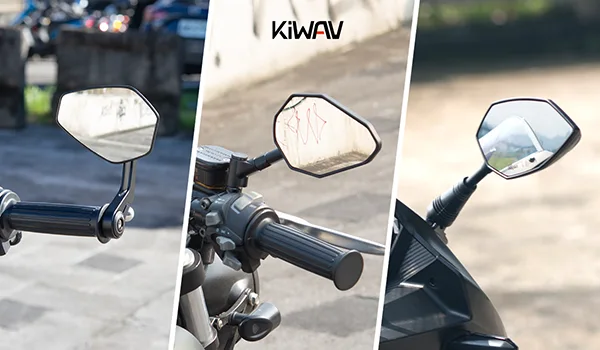
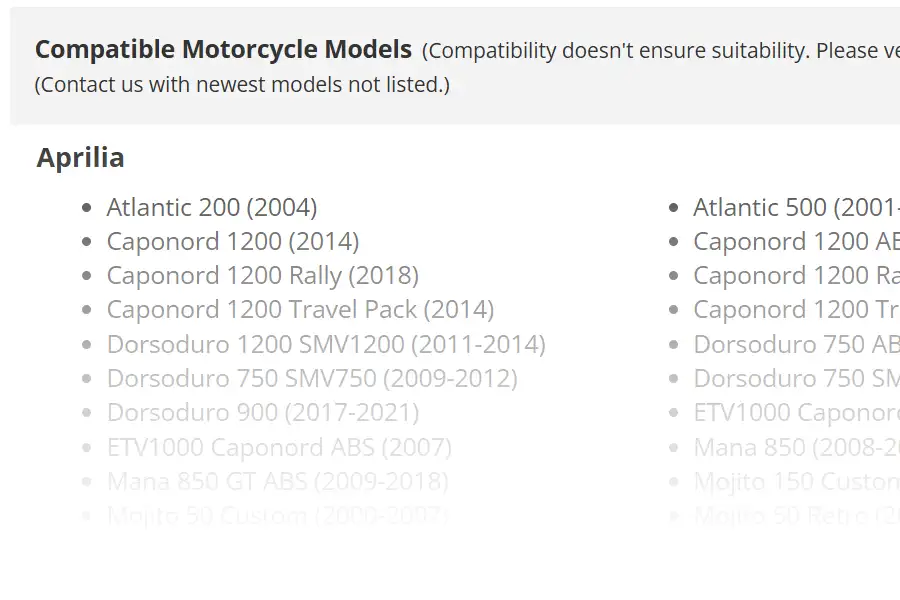
Motorcycle Mirror Fitment Guide: Will These Mirrors Fit My Bike?
Choosing a motorcycle mirror is not only about style. The biggest question most riders face is simple: will it actually fit the bike correctly?
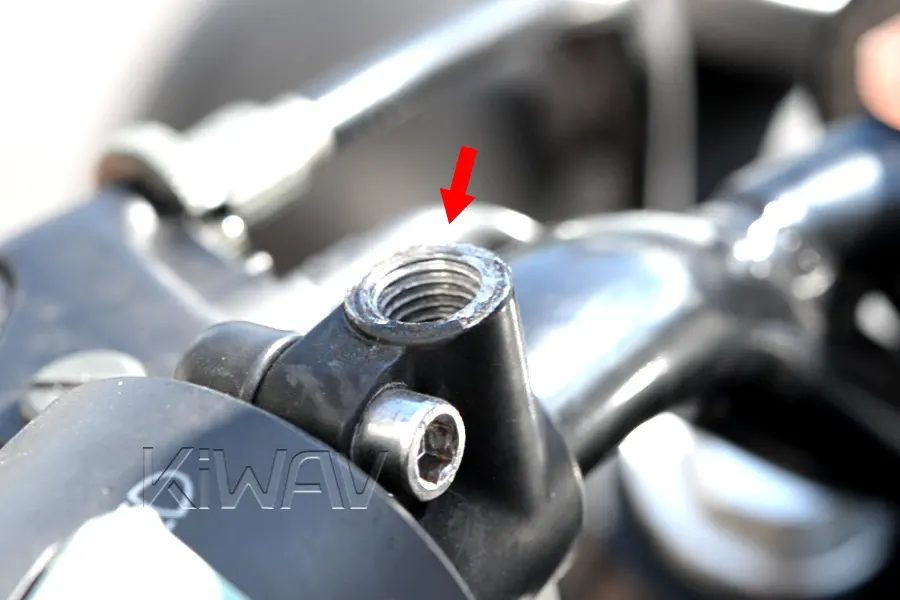
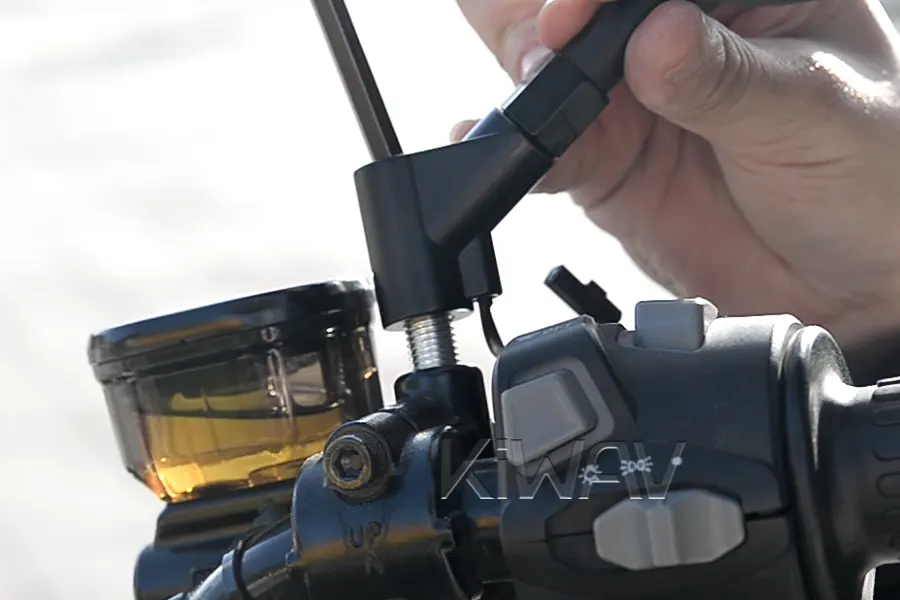
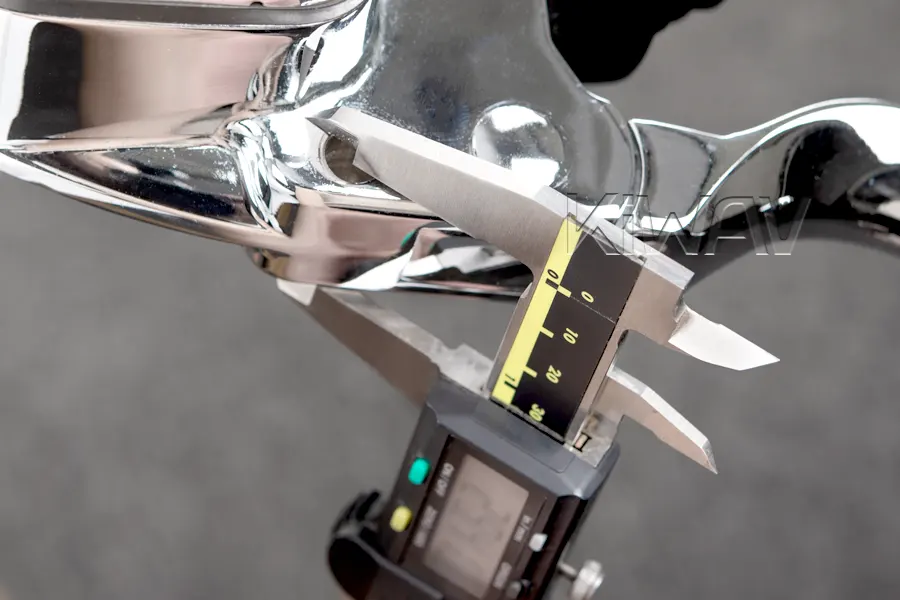
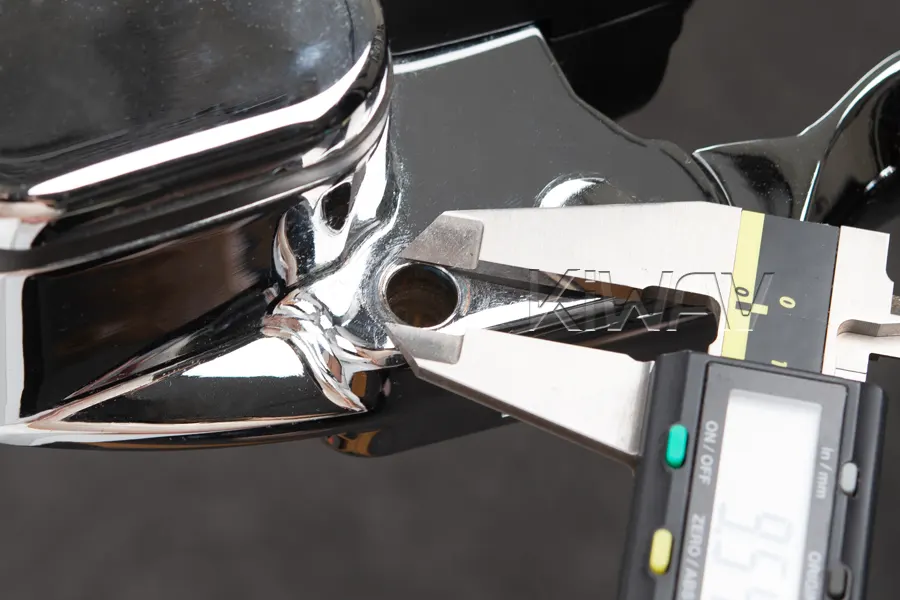
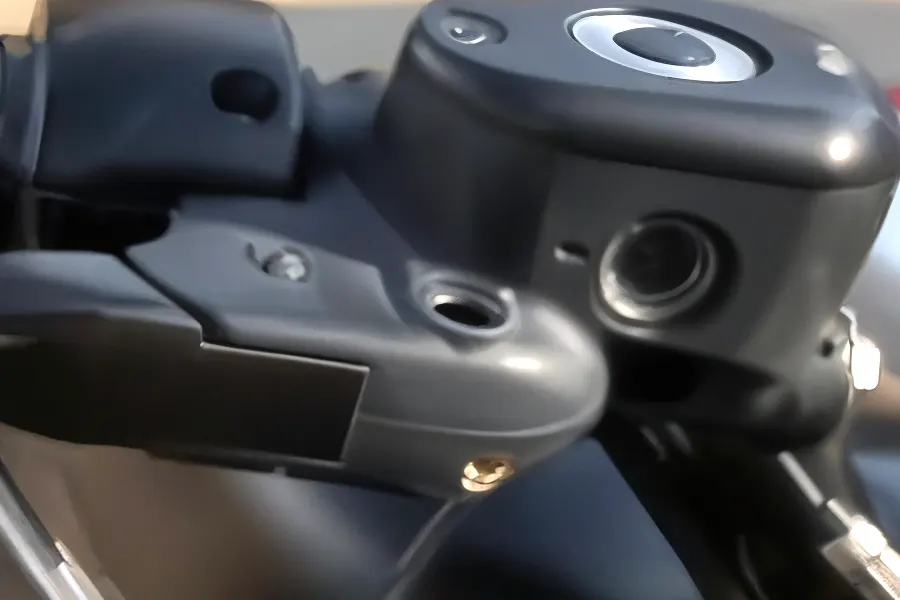
Many mirror fitment problems come from mismatches in thread size, thread direction, mounting style, required adapters, stem clearance, fairing interference, or handlebar construction. A mirror may look perfect in photos but still fail to install properly on your motorcycle.
This complete guide explains how motorcycle mirror fitment works, how to identify your bike's mounting type, and what to check before buying aftermarket mirrors.
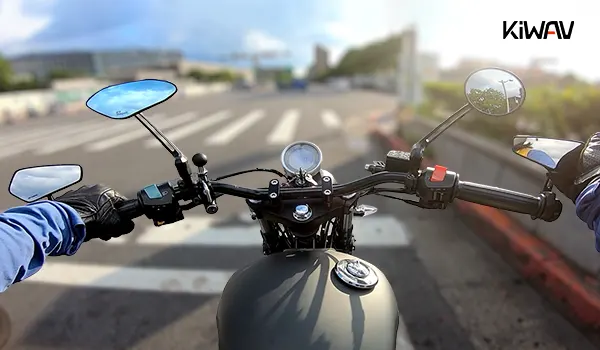
Are Bar-End Mirrors Legal? Bar-End vs Stock Motorcycle Mirrors
Are Bar-End Mirrors Legal?
Whether bar-end mirrors are legal for road use depends on local requirements and the specific mirrors and installation. Check the rules where you ride before buying or fitting a set. A bar-end mounting position alone does not establish road legality.
Check the individual product specifications as well as fitment. You can browse KiWAV bar-end mirrors and use our bar-end mirror fitment check to identify the mounting information you need.
Once you have checked local requirements and compatibility, compare bar-end and stock mirrors below for rear visibility, vibration and everyday use.
Motorcycle mirrors do more than satisfy legal requirements. They directly affect rear visibility, lane-change confidence, and overall riding awareness. Among the most common setups, riders often compare bar-end mirrors vs stock mirrors to decide which one gives a better view behind the bike.
The answer depends on mirror position, rider body shape, handlebar width, and riding style. In many cases, bar-end mirrors provide a wider and less obstructed rearward view, while stock mirrors offer a higher and more familiar factory-style position.
This guide explains the real differences between bar-end mirrors and stock mirrors, including visibility geometry, vibration, daily usability, and which setup may work better for different riders.
Why This Comparison Matters
Many riders assume mirrors are interchangeable as long as they reflect traffic behind. In practice, mirror placement changes what you actually see.
A poor mirror setup can cause:
- Shoulders or elbows blocking the view
- Narrow lane coverage
- Blurred reflections from vibration
- Delayed rear awareness during lane changes
That is why the comparison between stock motorcycle mirrors and bar-end mirrors is not just about style. It is about how effectively a rider can monitor surrounding traffic.
What Are Stock Mirrors?
Stock mirrors are the mirrors supplied by the motorcycle manufacturer. They are usually mounted:
- Near the brake and clutch perch
- On the fairing
- Above the handlebar line
Factory mirrors are designed to provide a basic legal rearward field of view across a broad range of riders. They are often practical and familiar, but they do not always give the best visibility for every body type or riding position.
Typical strengths of stock mirrors
- Familiar factory layout
- Higher viewing position
- Usually easy to fold or adjust
- Designed around OEM appearance and compliance
Common weaknesses of stock mirrors
- Shoulders often block part of the mirror
- Narrower spacing between left and right mirrors
- Some long mirror stems vibrate at speed
- May show too much of the rider’s arms instead of adjacent lanes
If your current mirrors mostly show your own shoulders, proper adjustment may help first→ How to Adjust Motorcycle Mirrors Properly
What Are Bar-End Mirrors?
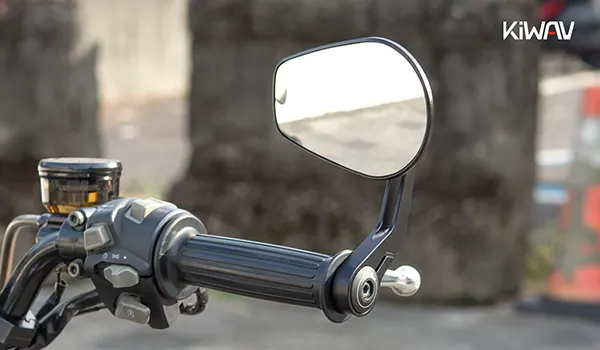
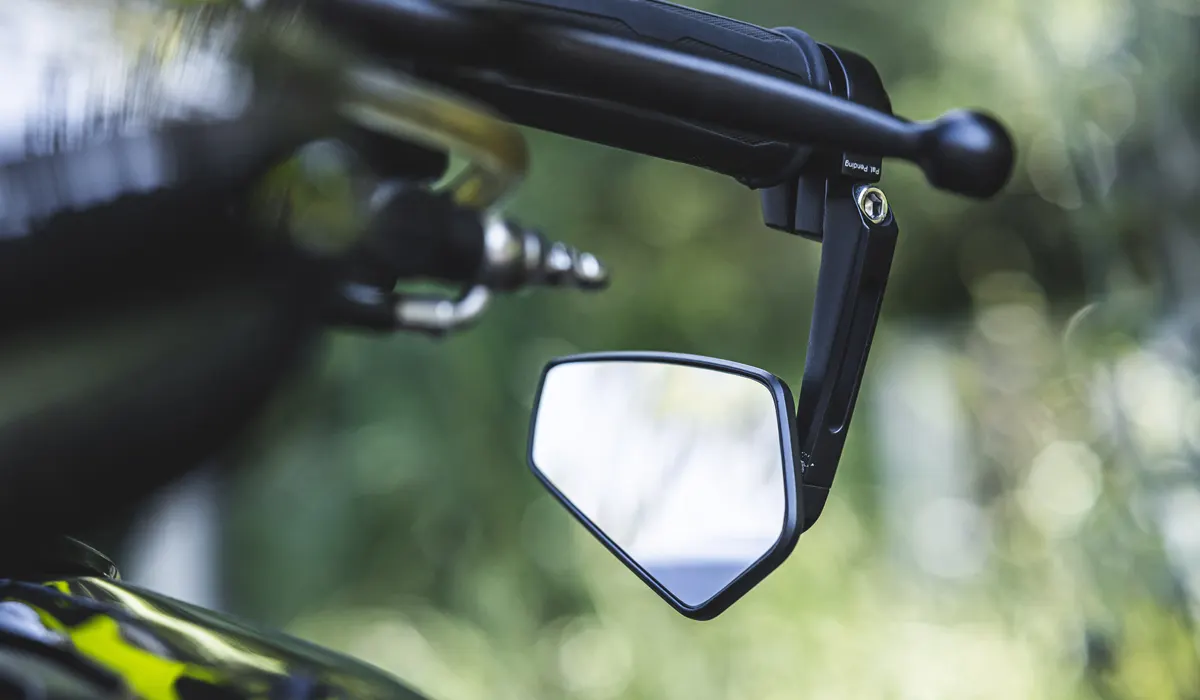
Bar-end mirrors mount at the outer ends of the handlebars instead of near the control perch or fairing. This moves the mirrors farther outward from the rider’s body.
That wider placement is the main reason many riders choose them. By sitting farther apart, bar-end mirrors often create a broader rear visibility triangle and reduce body obstruction.
Typical strengths of bar-end mirrors
- Wider mirror spacing
- Less shoulder and elbow blockage
- Cleaner view of adjacent lanes
- Often more stable when paired with proper bar-end weights
- Sporty, minimal cockpit appearance
Common weaknesses of bar-end mirrors
- Lower mounting position than many stock mirrors
- May take time to get used to
- Can be less ideal in very tight filtering conditions
- Some universal designs are not equally stable or well engineered
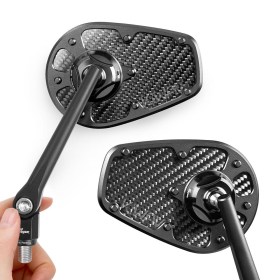
If you want to see the range of designs this section describes — ultra-compact to full-size, chrome, black and real carbon fiber, with folding mechanisms and adjustable arms — you can browse KiWAV's bar-end mirrors, engineered and made in Taiwan.
Bar-End Mirrors vs Stock Mirrors: The Real Visibility Difference
The biggest difference is not just location. It is geometry.
Stock mirrors: narrower viewing triangle
Because stock mirrors sit closer to the centerline of the motorcycle, the left and right mirrors are spaced closer together. This can create:
- More overlap with the rider’s shoulders
- Reduced view of neighboring lanes
- More need to tuck elbows or shift posture
Bar-end mirrors: wider viewing triangle
Bar-end mirrors sit farther outboard, which increases horizontal mirror separation. This usually gives:
- Less body interference
- Better side-lane coverage
- Easier rear scanning without exaggerated body movement
For many riders, especially on naked bikes, sport bikes, and some standard motorcycles, this wider spacing is the main reason bar-end mirrors feel more effective than stock mirrors.
Why Some Riders See Better with Bar-End Mirrors
Not every rider experiences mirrors the same way. Rear visibility is affected by:
- Shoulder width
- Arm position
- Riding posture
- Handlebar width
- Mirror head size and convexity
Riders with broader shoulders or a more forward-leaning position often find that stock mirrors show too much of their upper body. In those cases, bar-end mirrors can dramatically improve usable rear vision.
This is especially relevant for:
- Sport bike riders
- Short riders dealing with shoulder obstruction
- Riders using wider bars
- Riders who want clearer lane awareness in urban traffic
Riders with a lower eye line or compact riding position? You may want to know→ How to Set Up Motorcycle Mirrors for Short Riders
Vibration: Which Mirror Type Is More Stable?
Mirror clarity matters just as much as mirror angle. A mirror that technically shows the road behind but becomes blurry at speed is far less useful.
Stock mirrors and vibration
Stock mirrors vary widely by motorcycle. On some bikes, OEM mirrors are excellent. On others, long stems and mounting position can allow more visible vibration, especially:
- On single-cylinder engines
- At certain RPM ranges
- On bikes with minimal damping in the mirror assembly
Learn more about mirror vibration → Why Motorcycle Mirrors Vibrate → How to Fix Motorcycle Mirror Vibration
Bar-end mirrors and vibration
A good bar-end mirror can be very stable because it mounts directly at the bar end. When combined with proper bar-end weights, the assembly may reduce oscillation and improve image clarity.
This matches your own preference pattern as well: bar-end weights are often important for preventing excessive mirror vibration, especially on lightweight or higher-vibration setups.
Still, quality matters. Cheap bar-end mirrors can shake badly, distort easily, or loosen over time. Mirror design, clamp structure, and material quality make a major difference.
Mirror stability is not only about mounting location but also about design quality → Why High-Quality Motorcycle Mirrors Matter
Which Setup Is Better for Lane Changes?
If the question is purely about rearward lane awareness, bar-end mirrors often have the advantage.
Why?
Because they usually:
- Show less of the rider’s shoulders
- Cover more of the neighboring lane
- Require less body repositioning to confirm traffic
That does not mean stock mirrors are unsafe. A well-designed OEM mirror setup can work very well. But when riders complain that they “cannot see past their shoulders,” bar-end mirrors are often the more effective solution.
Daily Riding Differences
Stock mirrors may suit you better if:
- You prefer a factory look
- You want the mirror higher in your line of sight
- You ride in extremely tight spaces often
- Your OEM mirrors already provide a clear, stable view
Bar-end mirrors may suit you better if:
- Your shoulders block stock mirrors
- You want a wider field of rear awareness
- You prefer a cleaner cockpit
- You ride a naked, sport, retro, or cafe-style motorcycle
- You want a more performance-oriented mirror position
When a mirror just feels right: The features riders notice over Time → Why Some Mirrors Feel Better in Daily Riding
Style vs Function: Is It Only About Looks?
No. Although bar-end mirrors are often chosen for style, the best reason to use them is functional visibility improvement.
Many riders first notice them because they look cleaner or more premium. But the long-term value usually comes from:
- Better rear coverage
- Reduced body obstruction
- Improved lane-check confidence
- More stable image on the right setup
That is why bar-end mirrors are not just a visual modification. On the right motorcycle, they can be a meaningful safety and awareness upgrade.
Quick Comparison: Bar-End Mirrors vs Stock Mirrors
| Feature | Stock Mirrors | Bar-End Mirrors |
|---|---|---|
| Mounting position | Perch, fairing, or upper handlebar area | Outer handlebar ends |
| Mirror spacing | Narrower | Wider |
| Shoulder obstruction | More common | Less common |
| Adjacent lane visibility | Moderate | Often better |
| Viewing height | Usually higher | Usually lower |
| Vibration control | Depends on OEM design | Often good with proper weights |
| Learning curve | Minimal | May take short adjustment period |
| Styling | Factory/OEM | Minimalist/custom/performance |
Which One Is Better Overall?
For many riders, bar-end mirrors provide better usable rear visibility than stock mirrors, mainly because the wider position reduces shoulder blockage and improves lane coverage.
However, stock mirrors still make sense when a rider wants:
- Factory ergonomics
- A higher mirror position
- Simple OEM replacement
- Proven compatibility with their bike
The better setup is the one that gives you a clear, stable, and low-obstruction rear view in your normal riding posture.
If your current stock mirrors mostly show elbows, shoulders, or blurred reflections, switching to a well-designed set of bar-end mirrors can be a major upgrade.
Bar-end models differ in mounting type, bar-size compatibility, and how much weight they carry to damp vibration, so the right set depends on the bike you ride. Our 2026 guide to the best bar-end mirrors by bike type compares current models and includes a fitment quick-reference table covering threaded, bolt-on, and clamp-on designs.
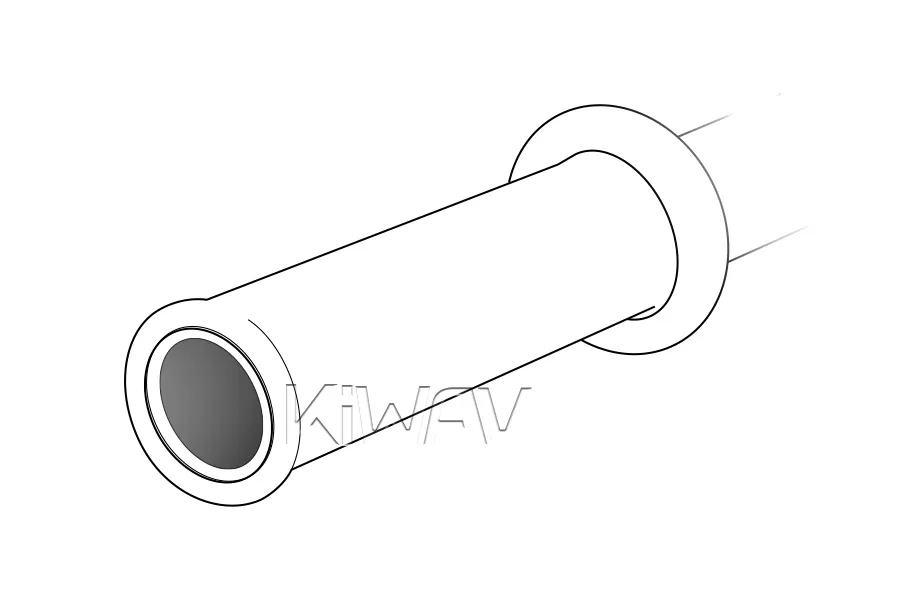
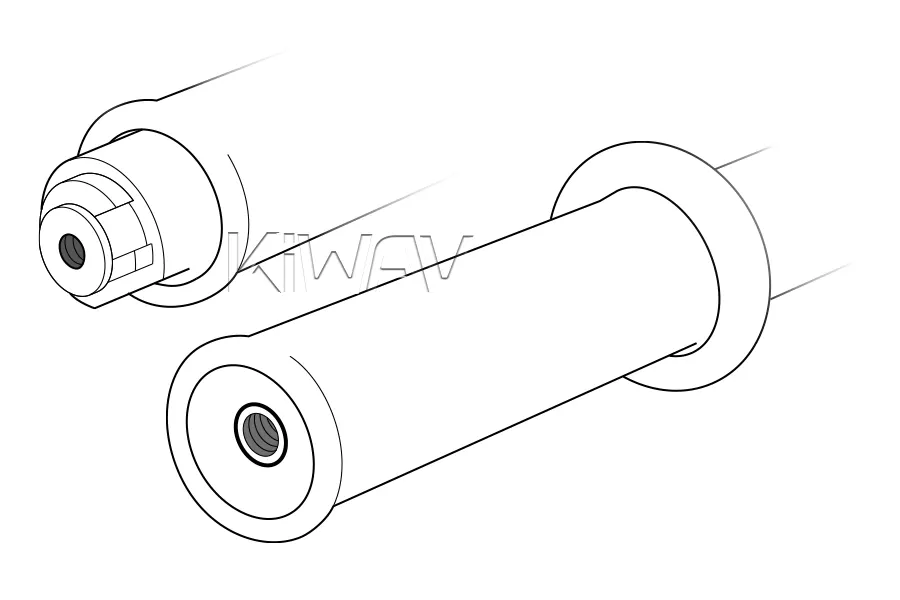
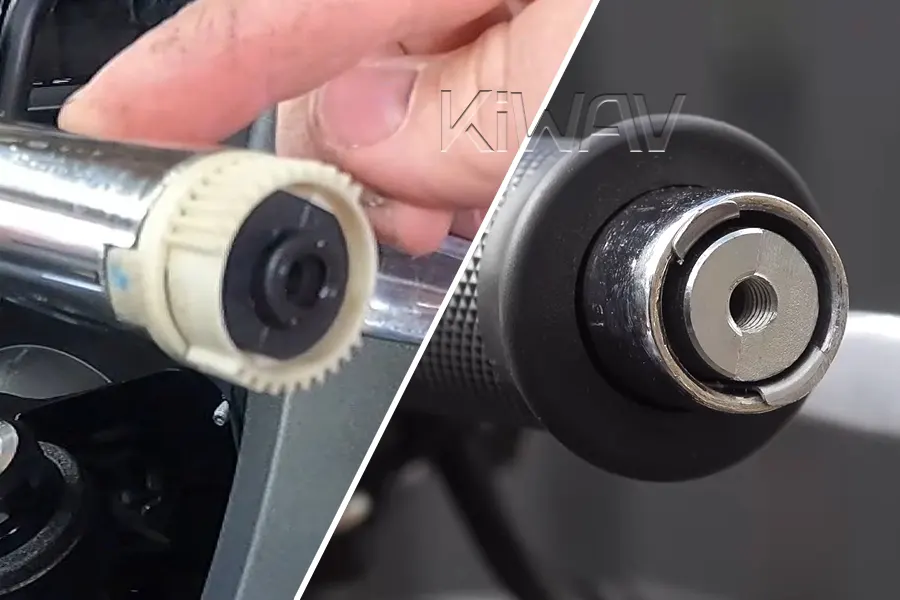
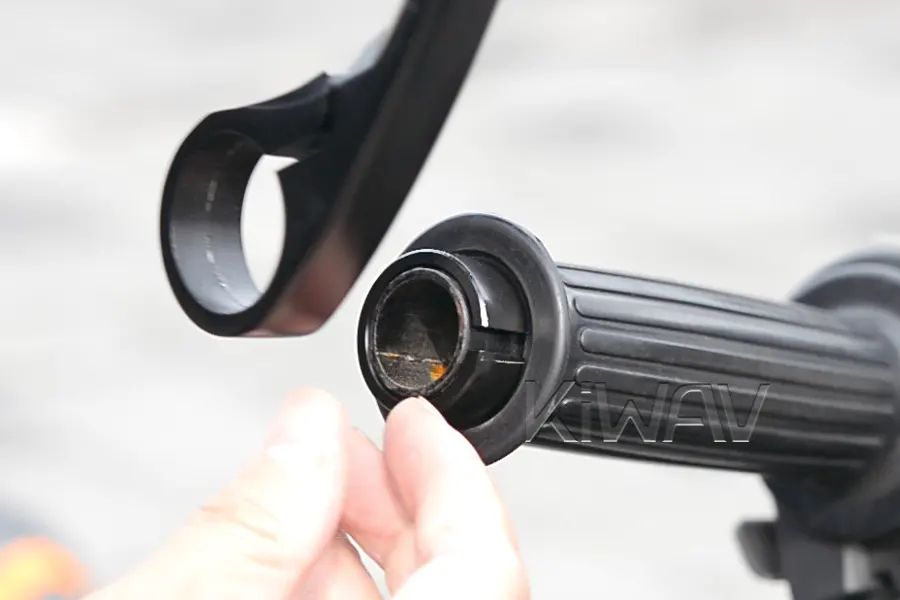
If the wider view is what you're after, the practical next step is checking fitment. KiWAV's bar-end mirror range covers clamp-on handlebars, threadless hollow bar ends, and bolt-in fitments from 5mm to 16mm across BMW, Triumph, Harley-Davidson, Indian, Royal Enfield, Moto Guzzi, Aprilia, Yamaha and Honda.
Frequently Asked Questions
Q: Are bar-end mirrors better than stock mirrors?
Bar-end mirrors are often better for rear visibility because they sit farther outward on the handlebars, reducing shoulder obstruction and widening the rear field of view. Stock mirrors can still work well, especially if they are properly designed and adjusted, but many riders find bar-end mirrors easier to use for lane awareness.
Q: Do bar-end mirrors give a wider view?
Yes, bar-end mirrors often give a wider usable view because the mirrors are spaced farther apart than stock mirrors. This wider positioning can improve visibility of adjacent lanes and reduce how much of the rider's shoulders appear in the mirror.
Q: Do stock motorcycle mirrors block rear visibility?
Stock mirrors can block rear visibility for some riders, especially if their shoulders, elbows, or riding posture interfere with the mirror view. This is a common reason riders switch to bar-end mirrors.
Q: Do bar-end mirrors vibrate less than stock mirrors?
They can. A well-designed bar-end mirror, especially when paired with proper bar-end weights, may produce a more stable image than some stock mirrors. However, vibration depends heavily on the quality of the mirror, the bike, and the mounting design.
Q: Who should choose bar-end mirrors?
Bar-end mirrors are often a good choice for riders whose stock mirrors show too much shoulder or elbow, riders who want a wider rearward view, and riders who prefer a minimalist or sport-oriented cockpit setup.
Q: Are bar-end mirrors legal?
In most markets bar-end mirrors are legal as long as they meet the local mirror requirements — typically a minimum reflective surface area, a required number of mirrors, and in Europe type approval. Rules differ by country and sometimes by state, so check your local regulation before fitting. You can compare designs across KiWAV's bar-end mirror range, where each product page lists its specifications.
Q: Are bar-end mirrors any good for everyday riding?
For daily riding the main gains are a wider view and less shoulder blockage, which matters most in traffic and during lane changes. The trade-off is added handlebar width, so check clearance if you filter or park in tight spaces. Compact and folding designs in the bar-end mirror range are made for exactly this.
Q: Are motorcycle mirrors convex?
Many motorcycle mirrors are convex, which widens the field of view but makes vehicles appear farther away and smaller than they really are — this is why convex mirrors carry a warning that objects are closer than they appear. Flat mirrors show true distance but cover a narrower view. If glass type matters to you, check the specification on the individual product pages in the bar-end mirror range.
Q: Are motorcycle mirrors universal?
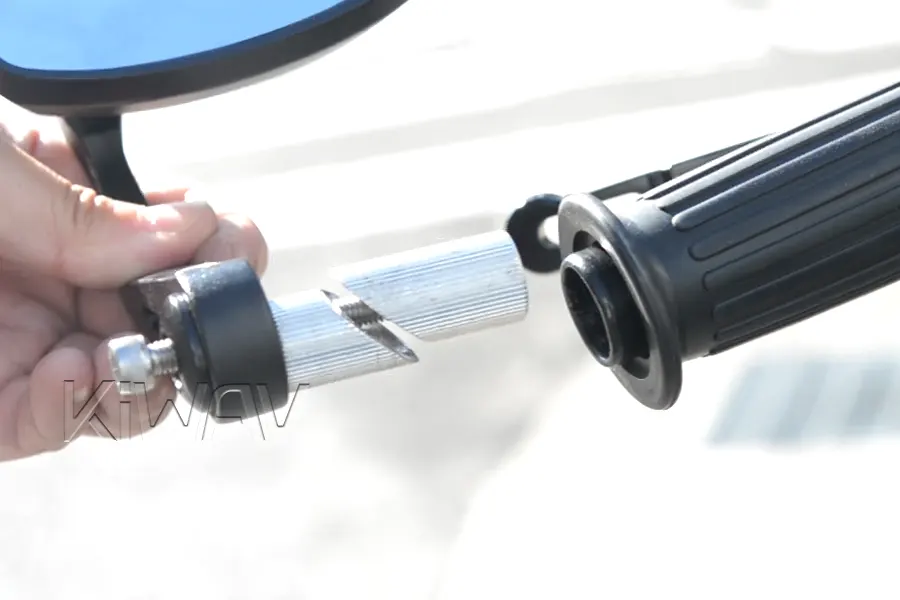
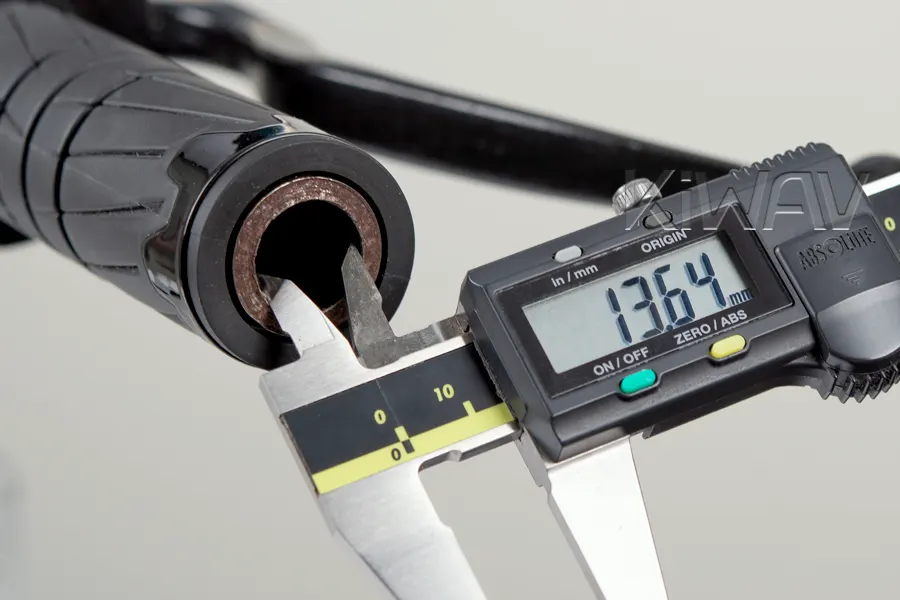
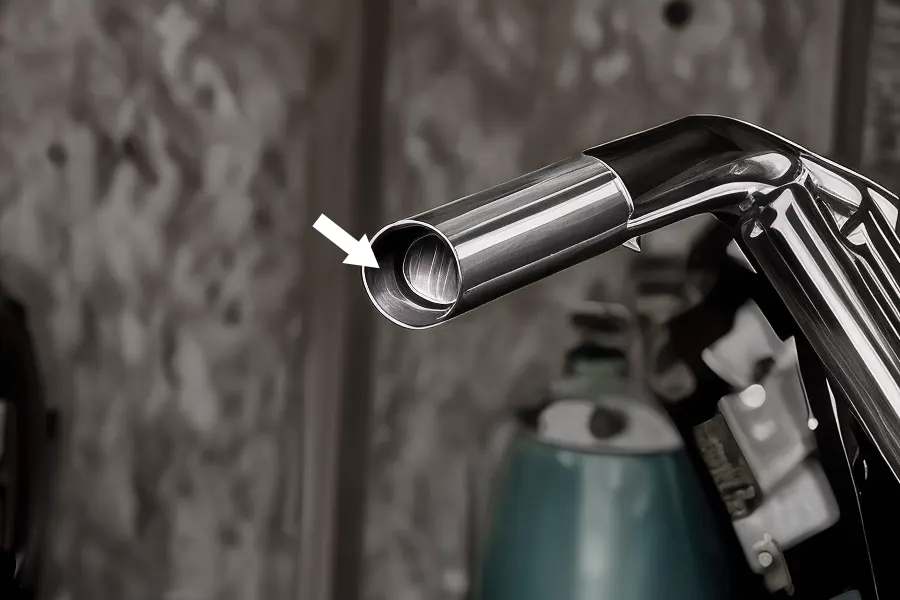
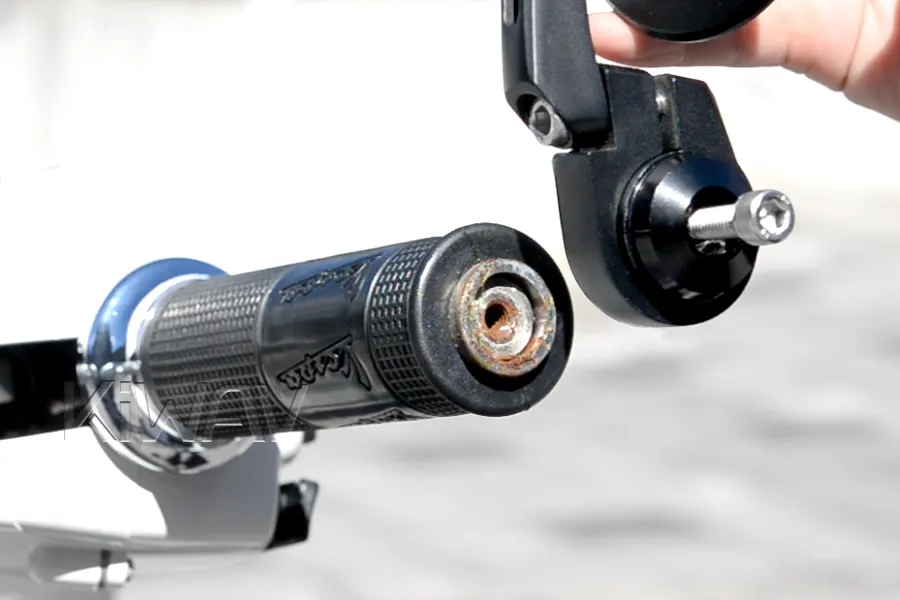
Not entirely. Handlebar mirrors depend on thread size and pitch, and bar-end mirrors depend on whether your bar end is threadless and hollow or takes a bolt — KiWAV alone lists fitments from a 5mm Triumph bolt up to a 16mm Yamaha bolt, plus clamp-on options for 7/8" and 1" bars. Confirm yours with the bar-end mirror fitment check, then pick from the bar-end mirror range.
Final Takeaway
When comparing bar-end mirrors vs stock mirrors, the core issue is not appearance. It is rear visibility geometry.
Stock mirrors are practical and familiar, but bar-end mirrors often create:
- Wider mirror spacing
- Less rider-body obstruction
- Stronger awareness of adjacent lanes
- A cleaner and more confidence-inspiring rear view
For riders who want improved rearward visibility, especially on naked and sport-oriented motorcycles, bar-end mirrors are often the more effective setup.
Ready to upgrade your rear view? Browse all KiWAV bar-end mirrors — or if you're not sure which mount your bike uses, start with the bar-end mirror fitment check first.
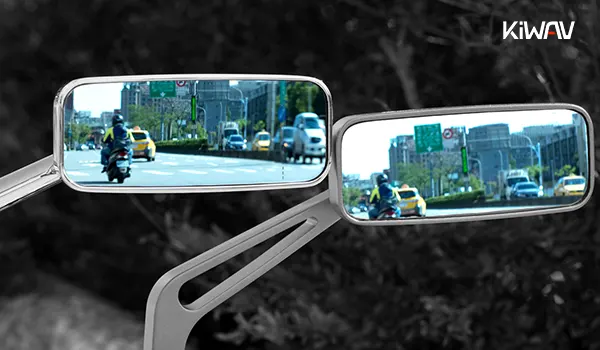
Wide-Angle Motorcycle Mirrors vs Standard Mirrors: What’s the Difference?
What Is the Difference Between Wide-Angle and Standard Motorcycle Mirrors?
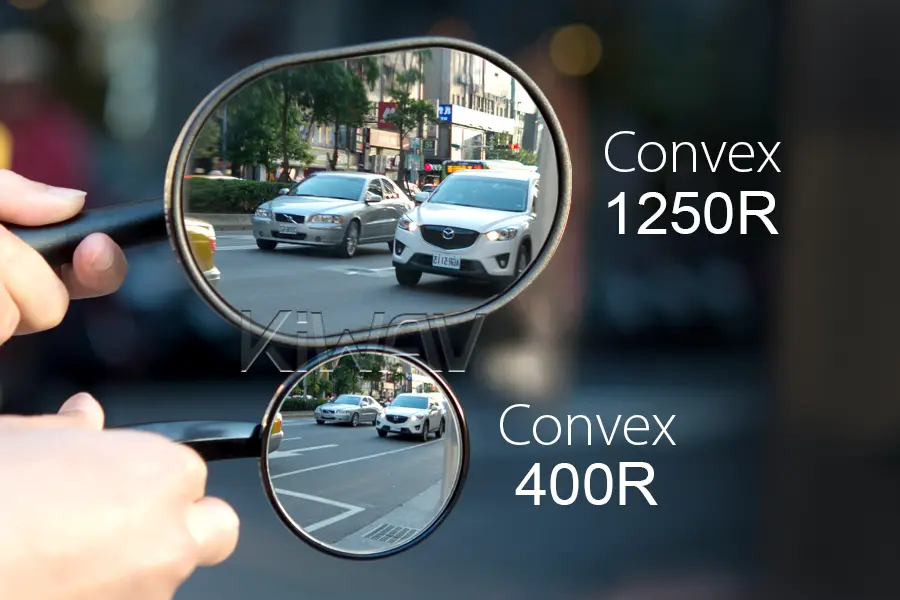
Most motorcycle side mirrors are convex, not concave: they provide a wider rear view, but vehicles appear smaller and farther away than they actually are. Wide-angle mirrors use stronger convex curvature for a wider field of view. Standard mirrors with gentler curvature show a narrower area, with less reduction in image size.
A smaller R number means stronger mirror curvature. For example, 400R glass is more strongly curved than 1000R glass.
Understanding Mirror Types
In motorcycle mirror design, three mirror surface types are commonly discussed:
- Flat (plane) mirrors
- Convex mirrors
- Aspherical mirrors
Understanding these mirror types helps riders choose mirrors that provide the best balance between wide rear visibility and accurate distance perception.
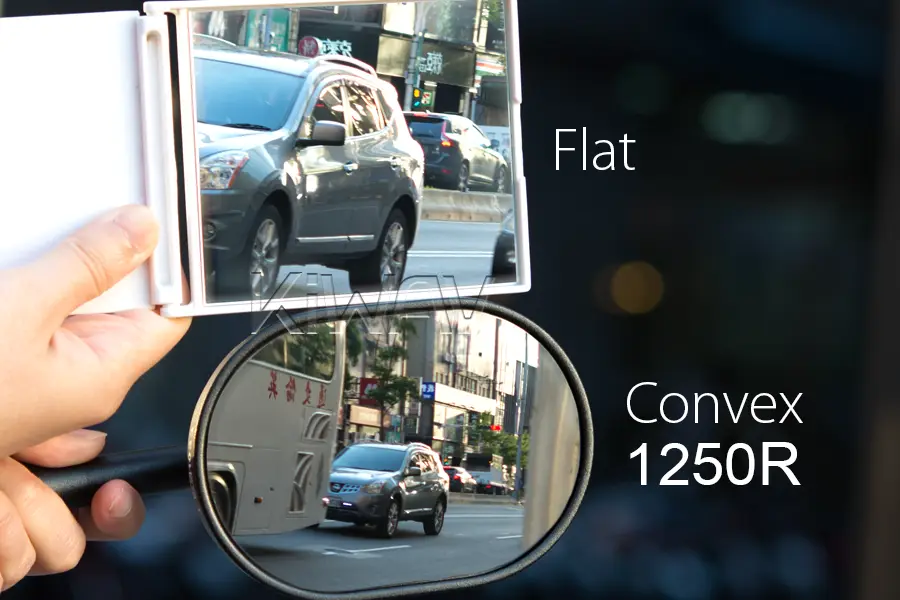
Flat Mirrors (Plane Mirrors)
A flat mirror, also called a plane mirror, reflects images without distortion. Objects appear at their true size and true distance, making it easy to judge how far away a vehicle is.
However, flat mirrors reflect only a narrow field of view.
Because motorcycles rely entirely on side mirrors for rear visibility, a flat mirror would leave large blind spots behind the rider. For this reason, flat mirrors are rarely used on motorcycle side mirrors.
Most motorcycle mirrors instead use convex mirror glass to expand the visible area behind the bike.
Convex Mirrors
Convex mirrors have a slightly curved surface that bulges outward. This curvature allows the mirror to reflect light from a wider area behind the motorcycle.
Convex mirrors help riders see:
- More of the road behind
- Vehicles approaching from adjacent lanes
- Traffic approaching from wider angles
The trade-off is that objects appear smaller and slightly farther away than they actually are.
Riders usually adapt to this quickly, which is why convex mirrors are the standard mirror design used on most motorcycles today.
Standard Mirrors vs Wide-Angle Mirrors
Although most motorcycle mirrors are convex, the degree of curvature varies.
| Mirror Type | Optical Design | Typical Curvature |
|---|---|---|
| Standard mirrors | Mild convex glass | Around 1000R or more |
| Wide-angle mirrors | Stronger convex glass | Around 400R–800R |
Standard mirrors use gentle curvature, producing a natural-looking image that is easy to interpret.
Wide-angle mirrors use stronger curvature, which expands the visible area behind the motorcycle.
How Wide-Angle Mirrors Expand the Field of View
The main advantage of wide-angle mirrors is the expanded field of view.
Because the mirror surface curves more strongly, it reflects light from a wider angle. This allows riders to see vehicles that might otherwise fall outside the viewing area of a standard mirror.
Benefits include:
- Improved detection of vehicles approaching from behind
- Better awareness of adjacent traffic lanes
- Reduced blind-spot areas near the motorcycle
For riders navigating busy urban traffic or multi-lane highways, the wider viewing angle can significantly improve rear awareness.
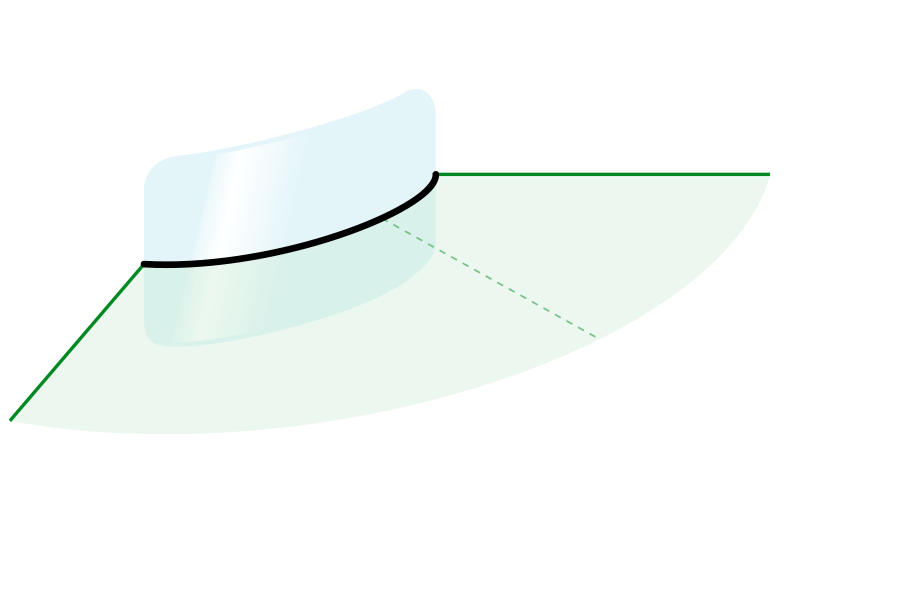
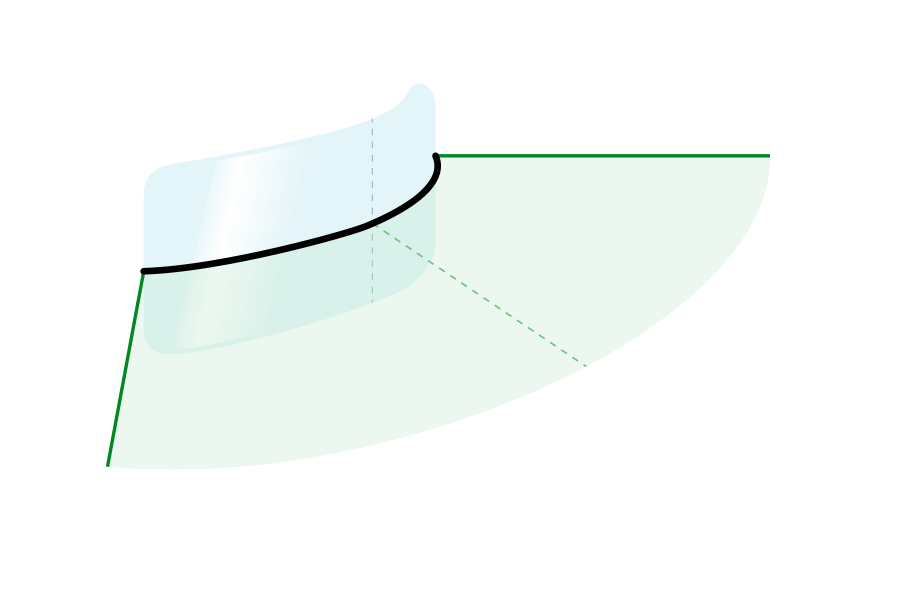
Diagram: Mirror Curvature vs Field of View
Mirror curvature affects field of view. Standard motorcycle mirrors are usually mildly convex, while wide-angle mirrors use stronger convex curvature to show more of the road behind. Aspherical mirrors combine both in one mirror.
The stronger the mirror curvature, the wider the viewing angle.
This diagram illustrates how mirror curvature affects visibility.
Standard mirror
(curvature: 1000R+)
Mild convex curvature, more natural distance perception.
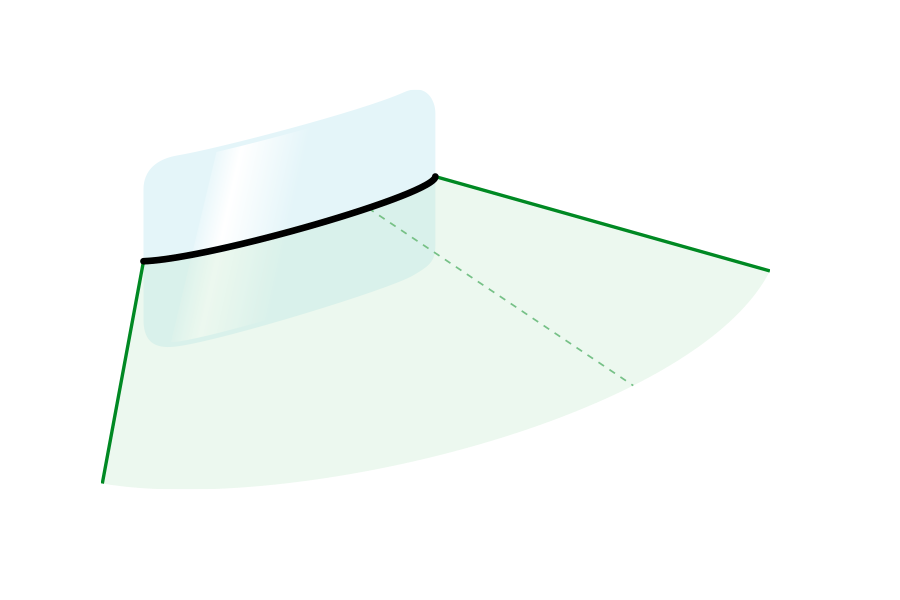
Wide-angle mirror
(curvature: 400R–800R)
Stronger convex curvature, wider field of view.
Aspherical mirror
(curvature: combination)
Mild convex inner zone + stronger convex outer zone.
Why Small Mirrors Can Still Cover a Wide Area
Many compact motorcycle mirrors—especially small bar-end mirrors—use stronger convex glass with a curvature radius around 400R.
The “R” value refers to the radius of curvature of the mirror surface.
Smaller radius = stronger curvature = wider field of view.
| Mirror Curvature | Field of View |
|---|---|
| 1000R | Mild convex |
| 800R | Wider viewing |
| 400R | Very wide viewing |
Because 400R mirrors curve more strongly, they can reflect a much wider area behind the motorcycle, even when the mirror itself is relatively small.
This is why compact bar-end mirrors can still provide good rear visibility.
The Trade-Off of Stronger Convex Mirrors
The wider viewing angle comes with a compromise.
Because the mirror curvature is stronger:
- Objects appear smaller
- Vehicles may appear farther away than they actually are
For riders used to standard mirrors, this can feel unusual at first. Many riders report that it takes a short adjustment period to become comfortable judging distances with stronger convex mirrors.
Some riders appreciate the expanded visibility, while others prefer mirrors with milder curvature.
Aspherical Mirrors: A Hybrid Design
Aspherical mirrors use two different mirror curvatures within the same mirror surface.
Typical layout:
Inner mirror zone → mild convex for accurate distance perception
Outer mirror zone → stronger convex for wide-angle visibility
This design allows riders to maintain distance accuracy in the center of the mirror, while the outer portion expands the visible field.
Aspherical mirrors are widely used in modern automotive mirrors and are increasingly found in premium motorcycle mirrors.


Mirror Adjustment Matters More Than Mirror Type
Mirror curvature is important, but mirror adjustment often has a greater impact on rear visibility than mirror type.
Even a wide-angle mirror cannot provide good visibility if it is poorly positioned.
Proper mirror setup should ensure:
- Shoulders occupy only a small portion of the mirror
- Mirrors show adjacent lanes
- The rearward viewing area is maximized
See also: How to Adjust Motorcycle Mirrors Properly
Mirror Position Also Affects Visibility
Mirror curvature is only one factor affecting rear visibility. The mounting position of the mirror also plays a major role.
Mirrors mounted farther outward—such as bar-end mirrors—often provide a wider rear view because they sit outside the rider’s shoulders.
See also: Bar-End Mirrors vs Stock Mirrors
Wide-Angle Mirrors vs Standard Mirrors: Quick Comparison
| Feature | Wide-Angle Mirrors | Standard Mirrors |
|---|---|---|
| Field of view | Wider | Narrower |
| Blind-spot coverage | Better | More limited |
| Distance perception | Slight distortion | More accurate |
| Learning curve | Slight adjustment | Very natural |
Frequently Asked Questions
Q: Are bike side mirrors concave or convex?
Most motorcycle side mirrors are convex, not concave. Their outward-curved glass provides a wider rear view but makes vehicles appear smaller and farther away than they actually are. Some motorcycle mirrors use flat glass.
Q: What does 400R mean on a motorcycle mirror?
The “R” value refers to the radius of curvature of the mirror surface. A mirror labeled 400R has a stronger convex curvature than a mirror with a larger radius such as 1000R. Stronger curvature expands the field of view but makes objects appear smaller and slightly farther away.
Q: Are wide-angle motorcycle mirrors better?
Wide-angle mirrors can improve rear visibility because they cover a larger viewing area behind the motorcycle. This helps riders detect vehicles approaching from adjacent lanes or from farther behind. However, stronger convex mirrors may slightly distort distance perception, so some riders prefer standard mirrors with milder curvature.
Q: Why do small bar-end mirrors still provide good visibility?
Many compact bar-end mirrors use stronger convex glass (often around 400R). This stronger curvature expands the field of view, allowing the mirror to reflect a wider area even though the mirror surface itself is smaller.
Q: What is an aspherical motorcycle mirror?
An aspherical mirror combines two different mirror curvatures. The center of the mirror uses mild convex curvature for accurate distance perception, while the outer edge uses stronger curvature to expand the field of view. This design helps reduce blind spots while keeping the center image easier to interpret.
Key Takeaway
- Most motorcycle mirrors use convex glass rather than flat mirrors
- Standard mirrors use mild convex curvature for natural viewing
- Wide-angle mirrors use stronger curvature to expand the field of view
- 400R mirrors allow small mirrors to cover a wider viewing area
- Aspherical mirrors combine wide visibility with better distance perception
- Mirror adjustment and mounting position also affect rear visibility
Choosing between wide-angle mirrors and standard mirrors ultimately depends on riding conditions, mirror size, and rider preference.
A Folding Convex Mirror for Road Use
For a road-use option, explore the KiWAV folding convex mirror, listed as E-mark certified for street use. Before ordering, select the correct M8 or M10 thread size and direction, or the 7/8-inch (22 mm) handlebar clamp option. Sold individually; order two for a pair.
Product Example: KiWAV Aura with 400R Convex Glass
KiWAV Aura bar-end mirrors use 400R chrome convex glass, providing an example of stronger curvature in a compact mirror.
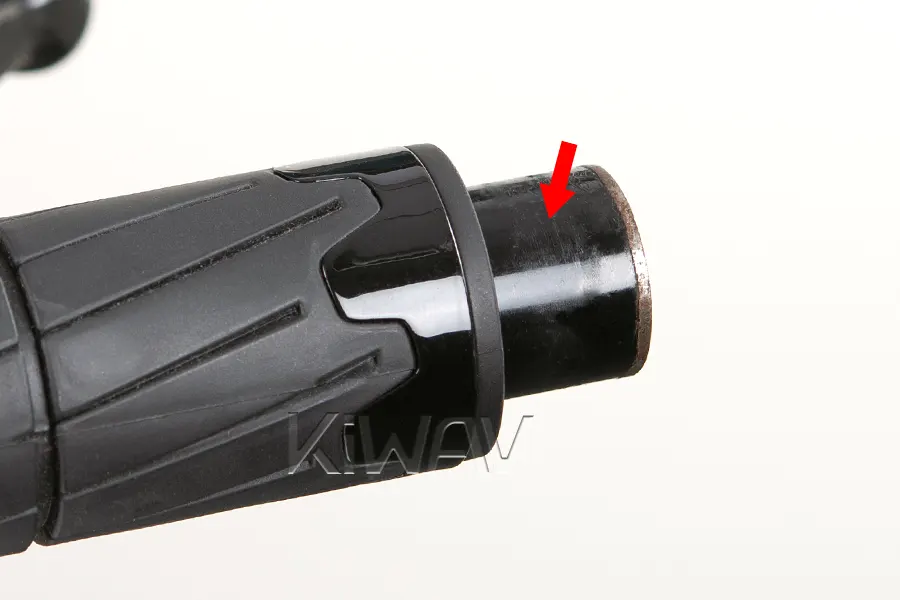
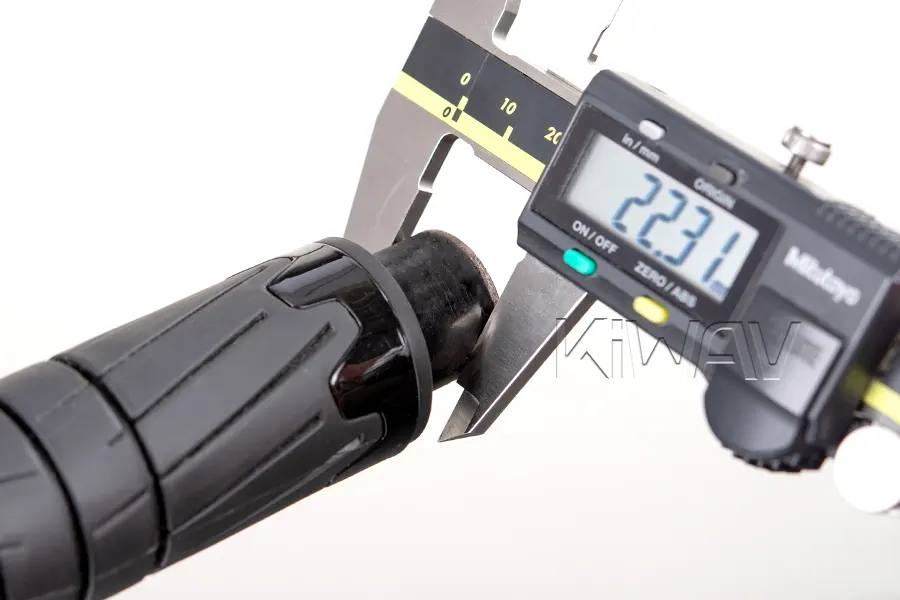
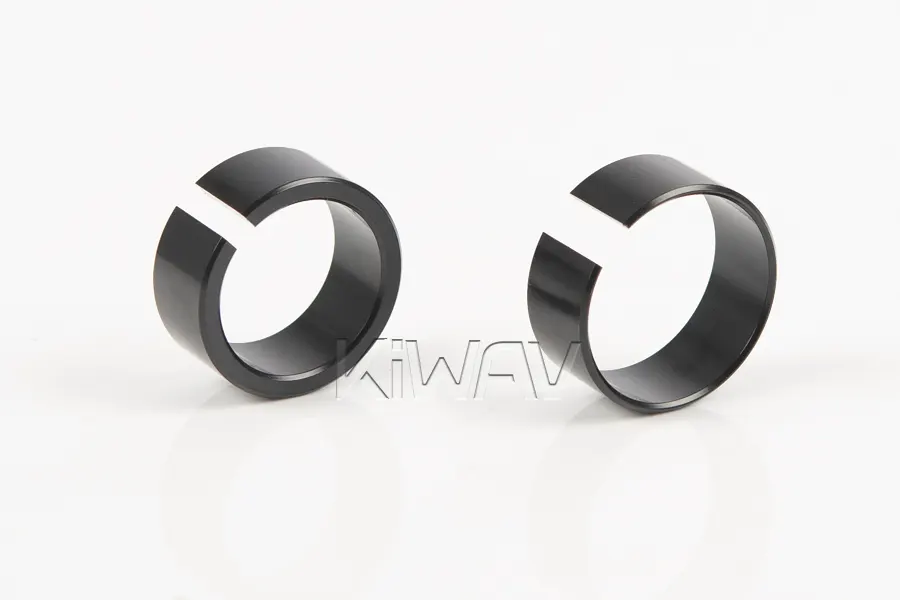
The clamp-on mounts include adapter rings for 22mm (7/8-inch) and 25mm (1-inch) mounting diameters. Check the mounting dimensions before ordering; handlebar end caps are not included.
For racing or show use only due to the small mirror size.
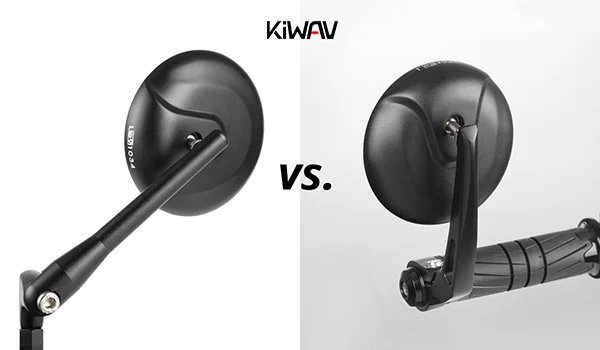
Bar-End vs Handlebar Motorcycle Mirrors: Which Is Right for You?
Which Is Better for Visibility, Comfort, and Daily Riding?
Motorcycle mirrors all do the same basic job, but they do not all work the same way in real riding.
The biggest difference between bar-end mirrors and standard handlebar-mounted mirrors is not only appearance. It is the mirror position relative to your body, your field of view, and how quickly you can check traffic behind you.
Many riders switch to bar-end mirrors because they are tired of seeing mostly their own shoulders and elbows in stock mirrors. In forum discussions, riders often say bar-end mirrors can give a wider, less obstructed rear view, especially when stock mirrors are narrow or mounted too close to the rider. At the same time, other riders still prefer conventional handlebar mirrors because they sit higher and are easier to check with a quicker glance.
This guide explains the real pros and cons of both types, who each style suits best, and when one design is clearly the better choice.
Quick Answer
Bar-end mirrors often provide a cleaner rear view because they sit farther outward and can reduce shoulder blockage.
Handlebar mirrors are usually easier to glance at quickly because they sit higher and closer to your natural forward line of sight.
So the better option depends on what problem you are trying to solve:
- If your stock mirrors mostly show your arms, bar-end mirrors may improve visibility
- If you want faster mirror checks in urban traffic, handlebar mirrors may feel more natural
- If you ride in tight spaces, filtering, or off-road conditions, the decision also depends on bike width, mirror folding ability, and durability
What Are Bar-End Mirrors?
Bar-end mirrors mount at or near the outer ends of the handlebars instead of the standard mirror perch location above the controls.
Because they sit farther outward, they often create a better viewing angle past the rider’s shoulders. That is one of the most common reasons riders say they switched. Forum discussions repeatedly mention that stock mirrors can be dominated by shoulder view, while good bar-end mirrors often open up a clearer rearward field.
Bar-end mirrors are especially common on:
- Naked bikes
- Café racers
- Retro motorcycles
- Custom builds
- Some sport and streetfighter setups
What Are Handlebar Mirrors?
For this comparison, handlebar mirrors means the more conventional mirrors mounted near the controls on the mirror perch or master-cylinder area.
These are the most common factory mirror layout on street motorcycles. Their main advantage is that they sit higher and closer to the rider’s normal eye line, so many riders find them faster and easier to check during routine riding.
They also tend to feel more familiar because they match what the bike was designed around from the factory.
Bar-End Mirrors vs Handlebar Mirrors: Main Differences
1. Rear Visibility
This is where bar-end mirrors often win.
Because bar-end mirrors are mounted farther outboard, they can see around the rider’s body more easily. If standard mirrors show too much shoulder, bar-end mirrors may immediately improve usable rear vision. Many riders describe this as the biggest functional benefit, not just a styling change.
However, not every bar-end mirror is automatically better. Small, flat, or low-quality versions can still give a poor view. The best-performing ones usually combine:
- Enough mirror surface area
- Useful convex curvature
- Stable construction
- Correct outward placement
Handlebar mirrors can still perform very well when they are long enough, properly positioned, and not blocked by the rider’s body. Some riders on certain bikes still prefer OEM mirrors for stability and overall usability.
General rule:
- If your current mirrors mainly show your shoulders, bar-end mirrors often improve rear visibility.
- If your current mirrors already give a clean view, switching may offer little practical gain.
2. Mirror Check Speed
This is where conventional handlebar mirrors often have the advantage.
Since they sit higher, they are usually closer to a rider’s normal forward scanning zone. That means many riders can check them with a smaller eye movement and less downward glance.
By contrast, bar-end mirrors usually require you to look slightly lower and farther outward. Riders commonly note this adjustment period in discussions. Some get used to it quickly and feel the better field of view is worth it. Others never like the lower glance angle.
So in terms of pure glance efficiency:
- Handlebar mirrors often feel quicker at first
- Bar-end mirrors may feel slower initially, but better once adjusted to
3. Shoulder and Elbow Obstruction
This is one of the strongest arguments for bar-end mirrors.
A major complaint with stock mirrors is that they show:
- Shoulders
- Elbows
- Jacket bulk
- Upper arms
Bar-end mirrors reduce that problem by moving the mirror outward. Riders often report a more open and useful image behind the bike for exactly this reason.
If your body position is upright and broad-shouldered, this difference can be substantial.
4. Vibration
This depends more on mirror quality, bar-end weight design, bike vibration characteristics, and mounting method than on mirror category alone.
Riders often point out that a good bar-end mirror can be very stable, while cheap ones can vibrate badly. Some also note that heavier bar-end designs can act somewhat like bar-end weights, helping reduce blur. Others point out that if the handlebar itself vibrates, no mirror design is fully immune.
Handlebar mirrors can also blur at certain RPM ranges, especially on bikes with more engine vibration.
So the better question is not “which style vibrates less?” but:
Is the mirror well made, correctly mounted, and matched to the bike?
5. Bike Width and Filtering
This area is more nuanced than many riders expect.
Some riders worry that bar-end mirrors make the bike much wider and therefore worse for lane filtering or tight traffic. In real-world rider discussions, some say the width increase is small enough not to matter much, while others still prefer higher-mounted mirrors depending on their traffic conditions and how close they ride around cars.
The real answer depends on:
- Actual mirror width
- Whether the mirrors fold
- Your local traffic patterns
- Whether your stock mirrors were already wide
On some bikes, bar-end mirrors may actually sit near the same width as the bars. On others, they clearly increase total width.
6. Durability and Daily Practicality
Handlebar mirrors are often the more practical default for general street use because they are:
- Familiar
- Easy to adjust
- Less exposed at the very edge of the bike
- Usually better integrated with the bike’s design
Bar-end mirrors can be more exposed to bumps, parking contact, garage walls, and drops. For daily commuting or urban parking, that can matter.
On the other hand, some bar-end mirrors fold, which improves practicality significantly. Riders in forum discussions also mention folding as a major advantage when a bike is parked, maneuvered, or used in tighter environments.
Comparison Table
| Factor | Bar-End Mirrors | Handlebar Mirrors |
|---|---|---|
| Rear view around shoulders | Often better | Often more blocked by arms |
| Mirror glance speed | Usually slower at first | Usually faster and more natural |
| Bike styling | Popular on naked / retro / custom bikes | More OEM and conventional |
| Filtering and tight spaces | Depends on total width and folding design | Often easier if narrower |
| Vibration performance | Highly dependent on quality and weight | Highly dependent on bike and mount |
| Daily practicality | Good if well designed and foldable | Usually easiest overall |
| Off-road / drop resistance | Often more exposed at bar edge | Usually less exposed |
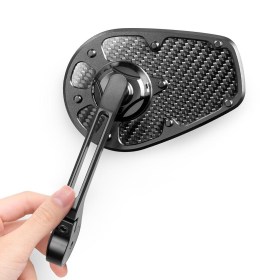
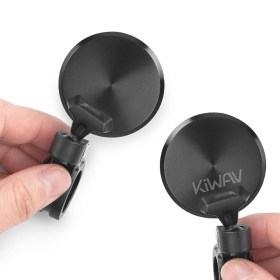
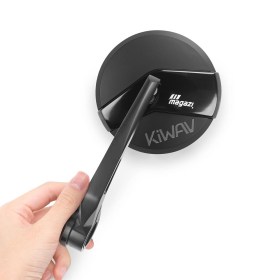
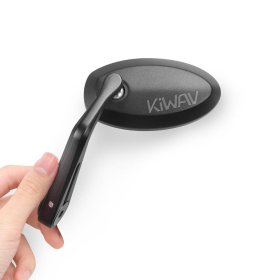
When Bar-End Mirrors Are the Better Choice
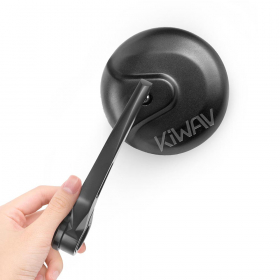
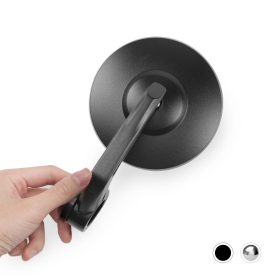
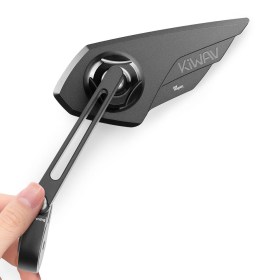
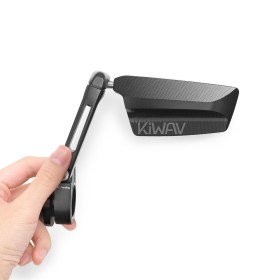
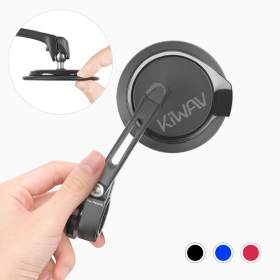
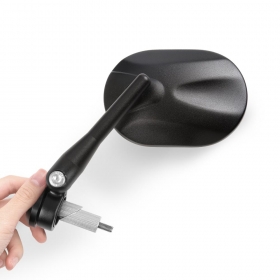
Bar-end mirrors usually make the most sense when:
- Your current mirrors mostly show shoulders or elbows
- You ride a naked bike, café racer, retro bike, or custom build
- You want a wider outward mirror position
- You care about cleaner styling
- You are willing to adapt to a slightly lower mirror glance
They can be especially effective for riders who feel their OEM mirrors are too narrow, too close, or visually crowded by the rider’s body.
When Handlebar Mirrors Are the Better Choice
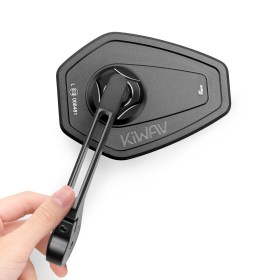
Standard handlebar mirrors are often the better choice when:
- You want the fastest and most natural mirror checks
- Your OEM mirrors already work well
- You commute daily in busy urban traffic
- You prioritize simplicity and convenience
- You do not want extra width at the bar ends
- Your riding includes more parking, tight maneuvering, or rough use
For many riders, a good set of properly adjusted conventional mirrors is still the most balanced all-around solution.

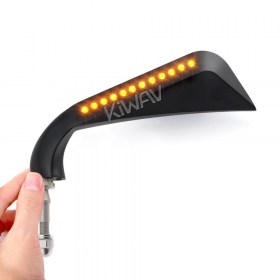
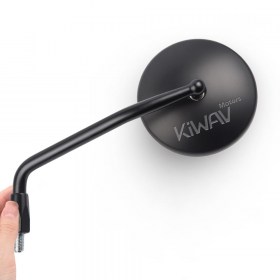
Common Mistake: Choosing by Looks Alone
This is one of the biggest mistakes riders make.
A lot of riders install bar-end mirrors mainly because they look cleaner, more aggressive, or more custom. That is fine, but a mirror is still first and foremost a safety component.
A good mirror should give you:
- A stable image
- Useful field of view
- Low body obstruction
- Easy repeatable adjustment
If a mirror looks good but is too small, too flat, too shaky, or too hard to check quickly, it is not a good upgrade.
Which One Is Safer?
Neither type is automatically safer.
A well-positioned mirror with a clear, stable view is safer than a poorly positioned mirror of any style.
Bar-end mirrors can be safer for some riders because they reduce shoulder blockage and improve usable rear vision.
Handlebar mirrors can be safer for other riders because they are quicker to check and easier to integrate into natural scanning habits.
The safest setup is the one that gives you:
- Clear view behind
- Minimal obstruction
- Low vibration
- Quick repeatable glance behavior
- Consistent shoulder-check habits
Frequently Asked Questions
Q: Are bar-end mirrors better than handlebar mirrors?
They can be. Bar-end mirrors often reduce shoulder obstruction and improve rear view, but handlebar mirrors are usually quicker to glance at.
Q: Do bar-end mirrors make a motorcycle wider?
Sometimes, yes. It depends on the mirror design, where it mounts, and whether it folds. In some cases the added width is minor; in others it is noticeable.
Q: Do bar-end mirrors vibrate more?
Not necessarily. Riders frequently report that build quality and mounting matter more than mirror style alone. Good bar-end mirrors can be stable, while cheap ones may blur badly.
Q: Why do riders switch to bar-end mirrors?
The most common reasons are better visibility past the shoulders, cleaner styling, and dissatisfaction with stock mirror placement.
Final Verdict
Bar-end mirrors are often better for reducing shoulder blockage and improving outward rear visibility.
Handlebar mirrors are often better for quick mirror checks, convenience, and everyday practicality.
So this is the cleanest conclusion:
- Choose bar-end mirrors if your main problem is blocked rear view and you want a wider, cleaner sightline
- Choose handlebar mirrors if your main priority is quick glance access and easy daily usability
For many riders, bar-end mirrors are not just a style modification. They are a real visibility upgrade. But only when the mirror is large enough, well made, properly mounted, and adjusted correctly.
Choosing a specific model comes down to fitment: whether your bars take a threaded, bolt-on, or clamp-on mount, and how much mirror weight your bike needs to keep the image stable. For model-by-model recommendations organised by bike type, including fitment notes for Harley, Indian Scout, Yamaha, BMW, and Triumph, see Best Motorcycle Bar-End Mirrors in 2026: Picks by Bike Type.
The Electric Frontier: Expertise for E-Bike Riders
Electric bikes present a unique set of challenges: silent motors, higher average speeds, and the integration of advanced electronics like Garmin Radar. This section focuses on achieving the ultimate rearward awareness for the modern electric platform.
→ Explore E-Bike Mirror Expertise & Technology
Installation & Safety Considerations
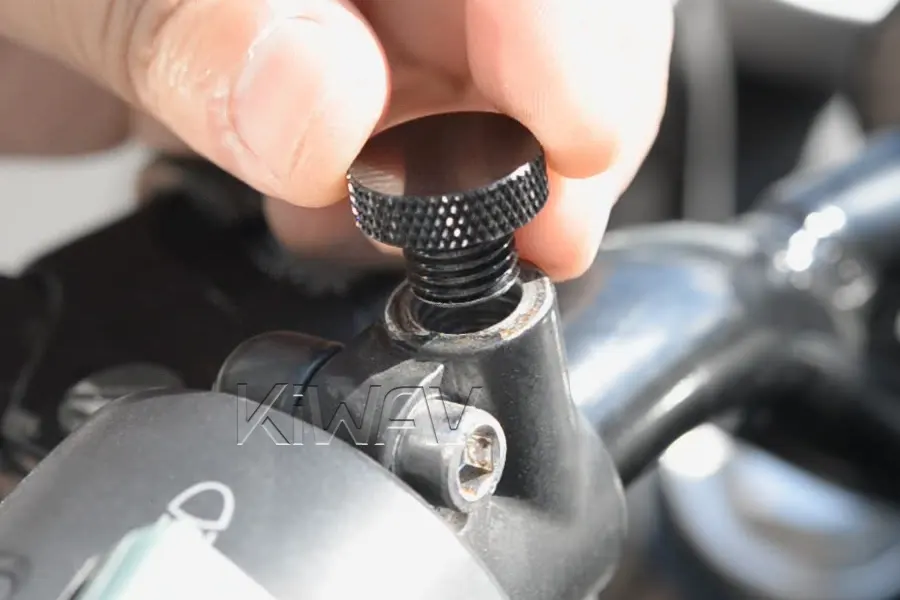
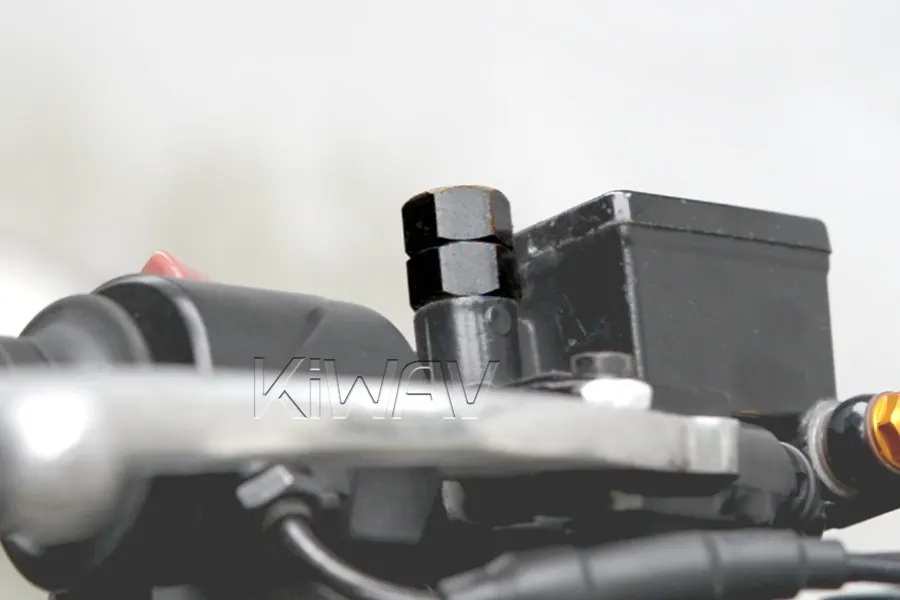
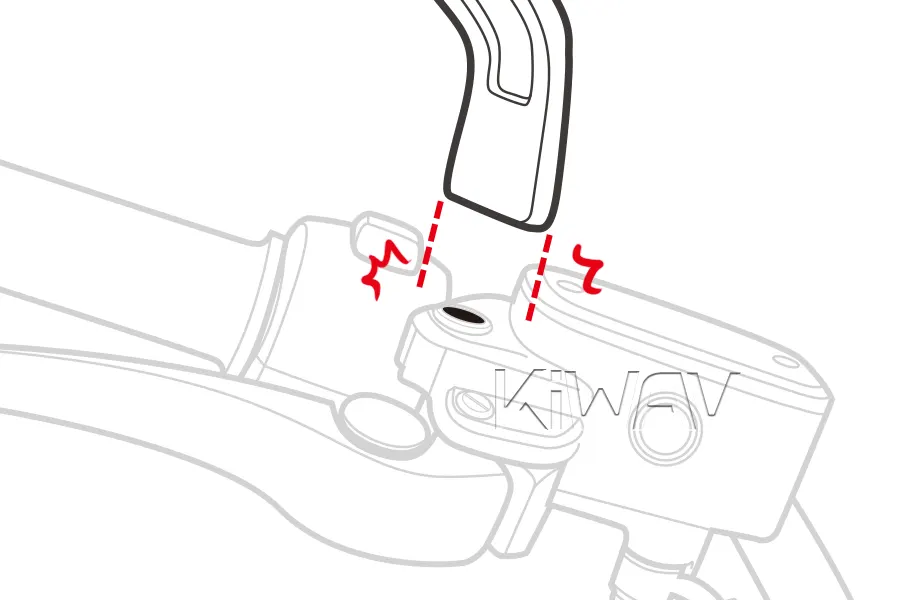
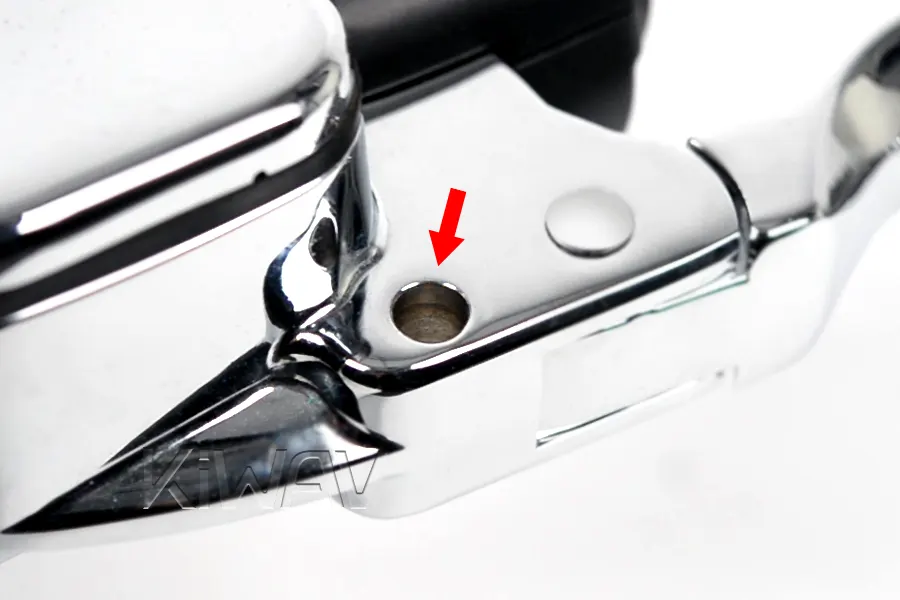
A mirror is only as good as its mount. Even a premium-designed lens can perform poorly if compromised by incorrect installation. Stability, position, and hardware compatibility are the three pillars of a safe mirror setup.
Bar-End Mirrors
- Installation basics and safety checks
- Vibration behavior and weight considerations
- Common mistakes and how to avoid them
→ The Complete Guide to Installing Motorcycle Bar-End Mirrors
Handlebar Mirrors
Handlebar-mounted mirrors include multiple mounting styles and require careful setup to ensure proper visibility.
- Perch-mount and bolt-through mounting explained
- Step-by-step instructions for all mirror connection types
- Pro tips and troubleshooting
→ The Complete Guide to Installing Motorcycle Handlebar Mirrors
Sportsbike Mirrors
Sportsbike mirrors are mounted directly to the fairing or upper cowl, not the handlebar. Their performance depends heavily on fairing stiffness, mounting hardware, and aerodynamic stability.
- Fairing-mounted mirror systems explained
- Vibration and flex caused by fairing panels
- Installation torque, spacers, and alignment considerations
→ The Complete Guide to Installing Sportsbike MirrorsComing Soon
Riding Technique & Visibility Mastery
Owning a high-quality mirror is only the first step. Mastering your rearward awareness requires proper adjustment, understanding blind spots, and knowing how to troubleshoot real-world issues like vibration. This section covers the essential techniques to ensure your mirrors provide a clear, reliable lifeline to the road behind you.
→ Explore Riding Technique & Visibility Mastery
Optimization & Adjustment
- How to Adjust Motorcycle Mirrors Properly? Best Position for Rear Visibility
- Finding Your Ideal Motorcycle Mirror PositionComing Soon
- How to Set Up Motorcycle Mirrors for Short Riders
Solving Common Visibility Issues
- Motorcycle Blind Spots Explained (and How to Fix Them)Coming Soon
- Why Your Mirrors Show Your Shoulders and How to Fix ItComing Soon
- Rear Awareness: From Motorcycle Mirrors to Radar
Managing Vibration & Clarity
Bringing Safety, Performance, and Style Together
This page serves as the central reference for motorcycle mirror knowledge.
Each article connects back here, creating a clear, structured system that helps riders make confident decisions—on the road and in the garage.