


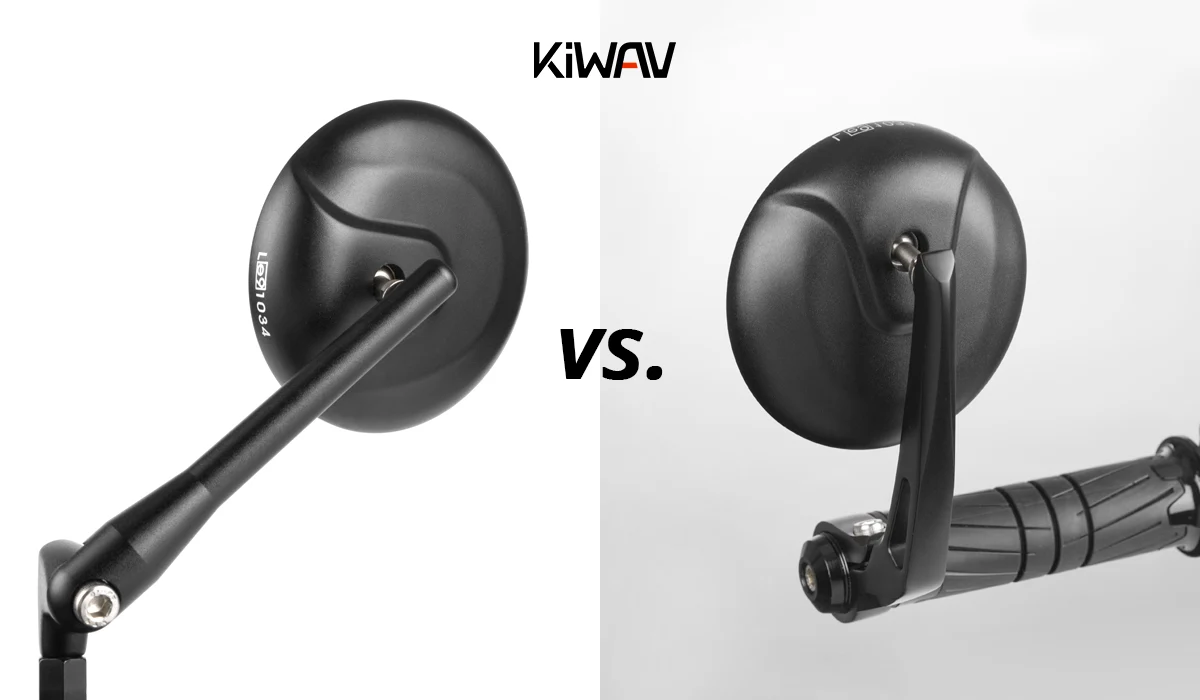
Which Is Better for Visibility, Comfort, and Daily Riding?
Motorcycle mirrors all do the same basic job, but they do not all work the same way in real riding.
The biggest difference between bar-end mirrors and standard handlebar-mounted mirrors is not only appearance. It is the mirror position relative to your body, your field of view, and how quickly you can check traffic behind you.
Many riders switch to bar-end mirrors because they are tired of seeing mostly their own shoulders and elbows in stock mirrors. In forum discussions, riders often say bar-end mirrors can give a wider, less obstructed rear view, especially when stock mirrors are narrow or mounted too close to the rider. At the same time, other riders still prefer conventional handlebar mirrors because they sit higher and are easier to check with a quicker glance.
This guide explains the real pros and cons of both types, who each style suits best, and when one design is clearly the better choice.
Quick Answer
Bar-end mirrors often provide a cleaner rear view because they sit farther outward and can reduce shoulder blockage.
Handlebar mirrors are usually easier to glance at quickly because they sit higher and closer to your natural forward line of sight.
So the better option depends on what problem you are trying to solve:
- If your stock mirrors mostly show your arms, bar-end mirrors may improve visibility
- If you want faster mirror checks in urban traffic, handlebar mirrors may feel more natural
- If you ride in tight spaces, filtering, or off-road conditions, the decision also depends on bike width, mirror folding ability, and durability
What Are Bar-End Mirrors?
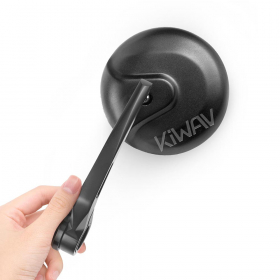
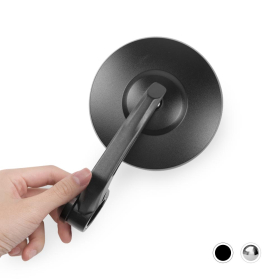
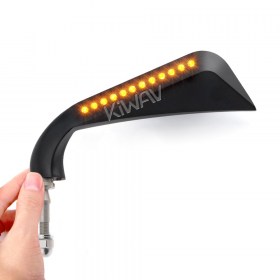
Bar-end mirrors mount at or near the outer ends of the handlebars instead of the standard mirror perch location above the controls.
Because they sit farther outward, they often create a better viewing angle past the rider’s shoulders. That is one of the most common reasons riders say they switched. Forum discussions repeatedly mention that stock mirrors can be dominated by shoulder view, while good bar-end mirrors often open up a clearer rearward field.
Bar-end mirrors are especially common on:
- Naked bikes
- Café racers
- Retro motorcycles
- Custom builds
- Some sport and streetfighter setups
What Are Handlebar Mirrors?
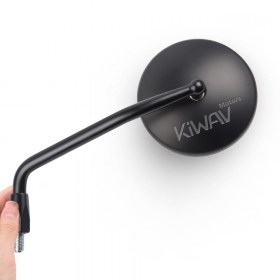
For this comparison, handlebar mirrors means the more conventional mirrors mounted near the controls on the mirror perch or master-cylinder area.
These are the most common factory mirror layout on street motorcycles. Their main advantage is that they sit higher and closer to the rider’s normal eye line, so many riders find them faster and easier to check during routine riding.
They also tend to feel more familiar because they match what the bike was designed around from the factory.
Bar-End Mirrors vs Handlebar Mirrors: Main Differences
1. Rear Visibility
This is where bar-end mirrors often win.
Because bar-end mirrors are mounted farther outboard, they can see around the rider’s body more easily. If standard mirrors show too much shoulder, bar-end mirrors may immediately improve usable rear vision. Many riders describe this as the biggest functional benefit, not just a styling change.
However, not every bar-end mirror is automatically better. Small, flat, or low-quality versions can still give a poor view. The best-performing ones usually combine:
- Enough mirror surface area
- Useful convex curvature
- Stable construction
- Correct outward placement
Handlebar mirrors can still perform very well when they are long enough, properly positioned, and not blocked by the rider’s body. Some riders on certain bikes still prefer OEM mirrors for stability and overall usability.
General rule:
- If your current mirrors mainly show your shoulders, bar-end mirrors often improve rear visibility.
- If your current mirrors already give a clean view, switching may offer little practical gain.
2. Mirror Check Speed
This is where conventional handlebar mirrors often have the advantage.
Since they sit higher, they are usually closer to a rider’s normal forward scanning zone. That means many riders can check them with a smaller eye movement and less downward glance.
By contrast, bar-end mirrors usually require you to look slightly lower and farther outward. Riders commonly note this adjustment period in discussions. Some get used to it quickly and feel the better field of view is worth it. Others never like the lower glance angle.
So in terms of pure glance efficiency:
- Handlebar mirrors often feel quicker at first
- Bar-end mirrors may feel slower initially, but better once adjusted to
3. Shoulder and Elbow Obstruction
This is one of the strongest arguments for bar-end mirrors.
A major complaint with stock mirrors is that they show:
- Shoulders
- Elbows
- Jacket bulk
- Upper arms
Bar-end mirrors reduce that problem by moving the mirror outward. Riders often report a more open and useful image behind the bike for exactly this reason.
If your body position is upright and broad-shouldered, this difference can be substantial.
4. Vibration
This depends more on mirror quality, bar-end weight design, bike vibration characteristics, and mounting method than on mirror category alone.
Riders often point out that a good bar-end mirror can be very stable, while cheap ones can vibrate badly. Some also note that heavier bar-end designs can act somewhat like bar-end weights, helping reduce blur. Others point out that if the handlebar itself vibrates, no mirror design is fully immune.
Handlebar mirrors can also blur at certain RPM ranges, especially on bikes with more engine vibration.
So the better question is not “which style vibrates less?” but:
Is the mirror well made, correctly mounted, and matched to the bike?
5. Bike Width and Filtering
This area is more nuanced than many riders expect.
Some riders worry that bar-end mirrors make the bike much wider and therefore worse for lane filtering or tight traffic. In real-world rider discussions, some say the width increase is small enough not to matter much, while others still prefer higher-mounted mirrors depending on their traffic conditions and how close they ride around cars.
The real answer depends on:
- Actual mirror width
- Whether the mirrors fold
- Your local traffic patterns
- Whether your stock mirrors were already wide
On some bikes, bar-end mirrors may actually sit near the same width as the bars. On others, they clearly increase total width.
6. Durability and Daily Practicality
Handlebar mirrors are often the more practical default for general street use because they are:
- Familiar
- Easy to adjust
- Less exposed at the very edge of the bike
- Usually better integrated with the bike’s design
Bar-end mirrors can be more exposed to bumps, parking contact, garage walls, and drops. For daily commuting or urban parking, that can matter.
On the other hand, some bar-end mirrors fold, which improves practicality significantly. Riders in forum discussions also mention folding as a major advantage when a bike is parked, maneuvered, or used in tighter environments.
Comparison Table
| Factor | Bar-End Mirrors | Handlebar Mirrors |
|---|---|---|
| Rear view around shoulders | Often better | Often more blocked by arms |
| Mirror glance speed | Usually slower at first | Usually faster and more natural |
| Bike styling | Popular on naked / retro / custom bikes | More OEM and conventional |
| Filtering and tight spaces | Depends on total width and folding design | Often easier if narrower |
| Vibration performance | Highly dependent on quality and weight | Highly dependent on bike and mount |
| Daily practicality | Good if well designed and foldable | Usually easiest overall |
| Off-road / drop resistance | Often more exposed at bar edge | Usually less exposed |
When Bar-End Mirrors Are the Better Choice
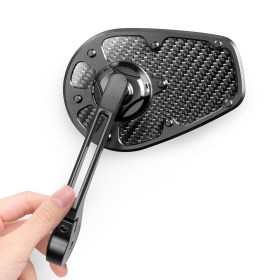
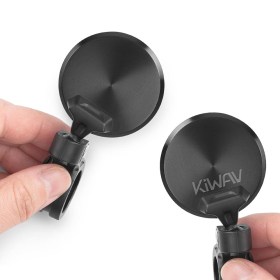
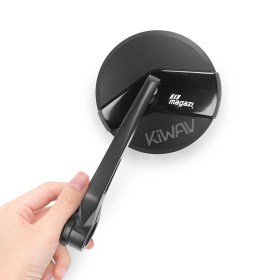
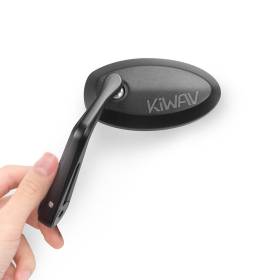
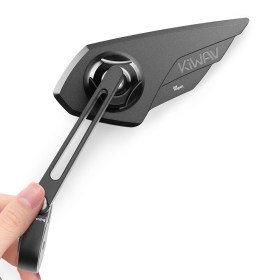
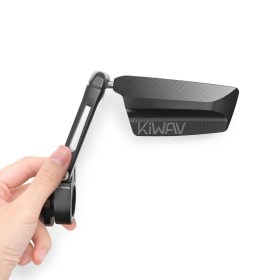
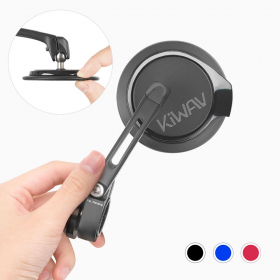
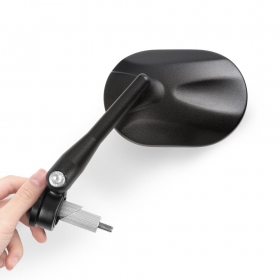
Bar-end mirrors usually make the most sense when:
- Your current mirrors mostly show shoulders or elbows
- You ride a naked bike, café racer, retro bike, or custom build
- You want a wider outward mirror position
- You care about cleaner styling
- You are willing to adapt to a slightly lower mirror glance
They can be especially effective for riders who feel their OEM mirrors are too narrow, too close, or visually crowded by the rider’s body.
When Handlebar Mirrors Are the Better Choice
Standard handlebar mirrors are often the better choice when:
- You want the fastest and most natural mirror checks
- Your OEM mirrors already work well
- You commute daily in busy urban traffic
- You prioritize simplicity and convenience
- You do not want extra width at the bar ends
- Your riding includes more parking, tight maneuvering, or rough use
For many riders, a good set of properly adjusted conventional mirrors is still the most balanced all-around solution.
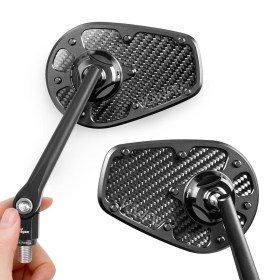
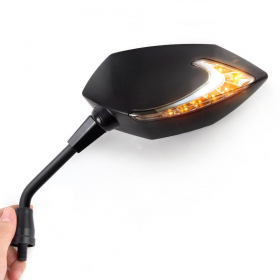
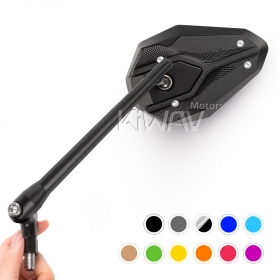
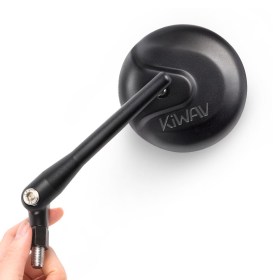
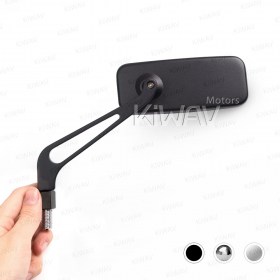

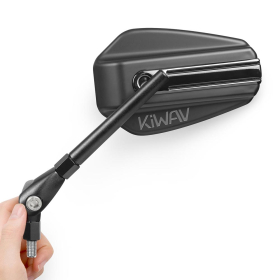
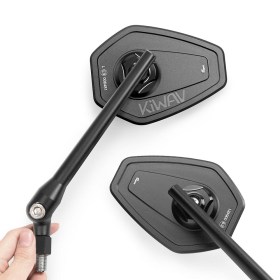
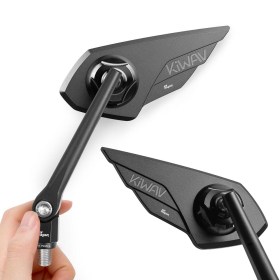
Common Mistake: Choosing by Looks Alone
This is one of the biggest mistakes riders make.
A lot of riders install bar-end mirrors mainly because they look cleaner, more aggressive, or more custom. That is fine, but a mirror is still first and foremost a safety component.
A good mirror should give you:
- A stable image
- Useful field of view
- Low body obstruction
- Easy repeatable adjustment
If a mirror looks good but is too small, too flat, too shaky, or too hard to check quickly, it is not a good upgrade.
Which One Is Safer?
Neither type is automatically safer.
A well-positioned mirror with a clear, stable view is safer than a poorly positioned mirror of any style.
Bar-end mirrors can be safer for some riders because they reduce shoulder blockage and improve usable rear vision.
Handlebar mirrors can be safer for other riders because they are quicker to check and easier to integrate into natural scanning habits.
The safest setup is the one that gives you:
- Clear view behind
- Minimal obstruction
- Low vibration
- Quick repeatable glance behavior
- Consistent shoulder-check habits
Frequently Asked Questions
Q: Are bar-end mirrors better than handlebar mirrors?
They can be. Bar-end mirrors often reduce shoulder obstruction and improve rear view, but handlebar mirrors are usually quicker to glance at.
Q: Do bar-end mirrors make a motorcycle wider?
Sometimes, yes. It depends on the mirror design, where it mounts, and whether it folds. In some cases the added width is minor; in others it is noticeable.
Q: Do bar-end mirrors vibrate more?
Not necessarily. Riders frequently report that build quality and mounting matter more than mirror style alone. Good bar-end mirrors can be stable, while cheap ones may blur badly.
Q: Why do riders switch to bar-end mirrors?
The most common reasons are better visibility past the shoulders, cleaner styling, and dissatisfaction with stock mirror placement.
Final Verdict
Bar-end mirrors are often better for reducing shoulder blockage and improving outward rear visibility.
Handlebar mirrors are often better for quick mirror checks, convenience, and everyday practicality.
So this is the cleanest conclusion:
- Choose bar-end mirrors if your main problem is blocked rear view and you want a wider, cleaner sightline
- Choose handlebar mirrors if your main priority is quick glance access and easy daily usability
For many riders, bar-end mirrors are not just a style modification. They are a real visibility upgrade. But only when the mirror is large enough, well made, properly mounted, and adjusted correctly.
Choosing a specific model comes down to fitment: whether your bars take a threaded, bolt-on, or clamp-on mount, and how much mirror weight your bike needs to keep the image stable. For model-by-model recommendations organised by bike type, including fitment notes for Harley, Indian Scout, Yamaha, BMW, and Triumph, see Best Motorcycle Bar-End Mirrors in 2026: Picks by Bike Type.
From here, you can explore: