


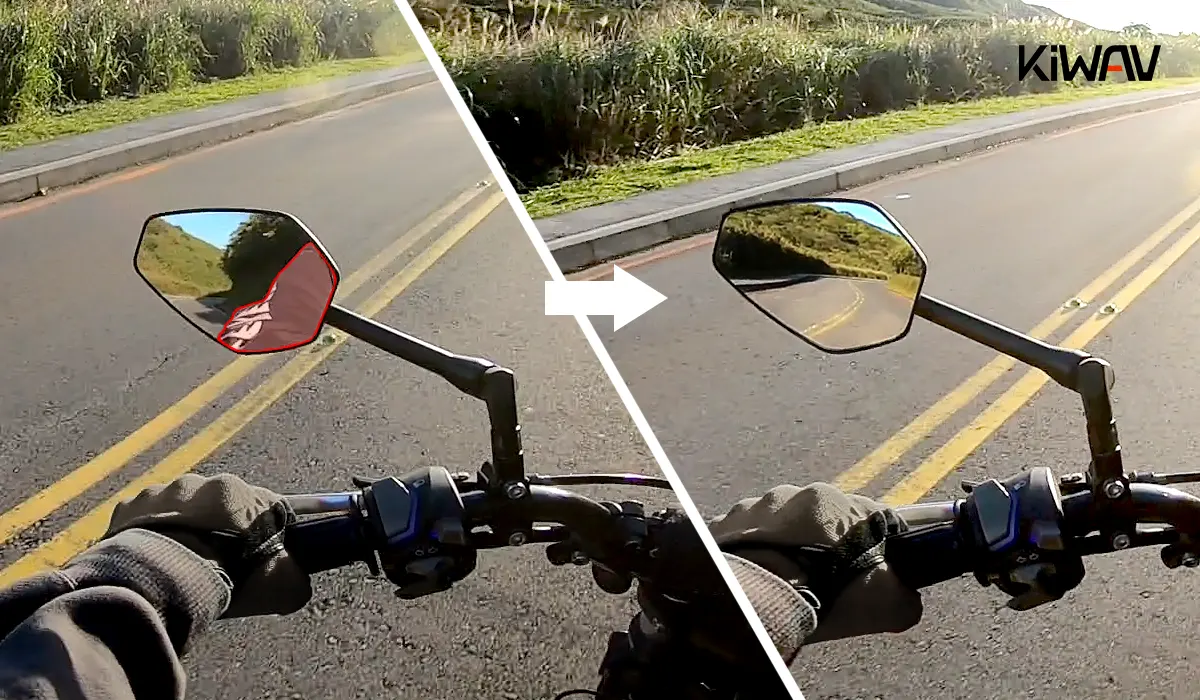
Motorcycle mirrors are one of the most important tools for situational awareness on the road. Unlike cars, motorcycles do not have a central rear-view mirror, which means riders must rely on two side mirrors and frequent shoulder checks to monitor traffic behind them.
When adjusted correctly, mirrors help riders:
- Detect approaching vehicles early
- Change lanes safely
- Monitor traffic at stops
- Maintain awareness without turning their head constantly
However, many riders discover that their mirrors show too much of their shoulders or elbows, or that the view behind the bike feels limited. This is a common problem caused by mirror placement, riding posture, and motorcycle design.
This guide explains how to correctly adjust motorcycle mirrors and includes practical tips frequently shared by experienced riders in motorcycle forums.
Step 1: Sit in Your Natural Riding Position
The most important rule is simple: Always adjust mirrors while sitting in your normal riding posture.
Mirror alignment depends on the rider's eye position. Because every rider has a different height, arm width, and riding style, the correct mirror position will vary slightly from person to person.
Before adjusting mirrors:
- Sit on the motorcycle
- Place both feet on the pegs
- Hold the handlebars normally
- Look straight ahead
If you adjust mirrors while standing beside the bike, they will almost always end up misaligned once you start riding.
Step 2: Start with a Neutral Mirror Position
Begin by positioning each mirror in a centered, neutral orientation. This gives you enough adjustment range to fine-tune the angle later.
Once centered:
- Loosen the mirror adjustment slightly
- Move the mirror slowly outward
- Tighten the mount once the position is close
Small adjustments often make a big difference in visibility.
Step 3: Aim Mirrors Slightly Outward
A common beginner mistake is pointing mirrors too far inward, which causes both mirrors to show the same view behind the bike. Instead, mirrors should expand your rearward view.
Ideally:
- The left mirror shows the left lane and traffic approaching from behind
- The right mirror shows the right lane and traffic approaching from behind
This creates a wider visibility zone behind the motorcycle. If both mirrors show the same vehicle behind you, they are probably too centered.
Step 4: Minimize Your Shoulder in the Mirror
Your shoulders should only occupy a small portion of the inner mirror edge.
A useful guideline is: Ensure your shoulder takes up no more than 20–25% of the view.
The remaining area should show the lane behind and beside your motorcycle. If most of the mirror shows your arm or shoulder, angle the mirror outward slightly.
Rider Insight
Many experienced riders prefer mirrors angled farther outward than beginners expect. This setup minimizes shoulder obstruction and expands the visible traffic area behind the motorcycle.
Step 5: Check the Rear Visibility Triangle
When both mirrors are properly adjusted, they should create a rear visibility triangle behind the motorcycle.
Example coverage:
Left mirror  → left lane + rear traffic

Right mirror → right lane + rear traffic
The view from both mirrors should overlap slightly but not completely.
This arrangement allows riders to monitor:
- Overtaking vehicles
- Traffic approaching quickly
- Vehicles in adjacent lanes
A Technique Riders Use in Practice
Motorcycle forums reveal a practical adjustment method used by many riders.
One common approach is:
Sit in riding position, adjust each mirror so you see the edge of the bike's tail, then move it slightly outward to reveal the road behind.
This method helps ensure mirrors are not pointing too far inward.
Another Forum Tip: Use Each Mirror for a Different Purpose
Some experienced riders deliberately set mirrors with slightly different priorities.
Examples shared in riding forums include:
- Left mirror focused on the passing lane
- Right mirror focused on traffic directly behind
This helps riders monitor both overtaking vehicles and approaching traffic more effectively.
What to Do About Blind Spots
Even perfectly adjusted motorcycle mirrors cannot eliminate blind spots completely. Because the rider's body sits directly between the mirrors, there will always be areas that mirrors cannot show.
For this reason, riders should combine:
- Mirror checks
- Quick shoulder checks
- Constant situational awareness
Many safety guides emphasize that shoulder checks remain essential before lane changes.
Mirror Adjustment Differences by Motorcycle Type
Different motorcycles require slightly different mirror angles.
Sport Bikes
Riders lean forward, which often places shoulders directly in the mirror view.
Solution:
- Angle mirrors further outward
- Tuck elbows slightly when checking mirrors
Naked Bikes
Handlebar mirrors usually sit closer to the rider.
Solution:
- Rotate mirrors outward
- Consider mirror extensions if shoulders block visibility
Cruisers and Touring Bikes
These bikes often have mirrors mounted higher or farther outward, which naturally improves visibility.
When Mirror Adjustment Still Doesn't Work
Sometimes mirror problems are caused by hardware limitations rather than adjustment.
Common issues include:
- Mirrors mounted too close to the rider
- Narrow mirror stems
- Small mirror glass area
Many riders report switching to bar-end mirrors or mirror extensions to improve visibility when shoulders block the view.
If that's where you've landed, this is what KiWAV makes. Our bar-end mirrors move the glass outboard of your shoulders, in threadless, bolt-in and clamp-on fitments, so there is a KiWAV mirror for nearly every bike on the road. Which one to pick depends on your bike — our 2026 bar-end mirror guide matches models to bike type, with fitment notes for Harley, Indian Scout, Yamaha, BMW and Triumph.
Final Safety Reminder
Proper mirror adjustment dramatically improves rear visibility, but mirrors alone are not enough.
Safe riders always combine:
- Mirror scans
- Shoulder checks
- Lane awareness
This combination allows riders to monitor traffic behind them while maintaining control and stability.
Key Takeaways
- Always adjust mirrors in your normal riding position
- Angle mirrors slightly outward to expand your field of view
- Your shoulders should occupy only a small portion of the mirror
- Use both mirrors to monitor different parts of traffic
- Always perform a shoulder check before lane changes
With correct mirror setup, riders can significantly improve their rearward awareness and ride more confidently in traffic.
Frequently Asked Questions
Q: How much shoulder should you see in motorcycle mirrors?
Ideally less than 20–25% of the mirror should show your shoulder. Most of the mirror should display the road behind and the adjacent lane.
Q: Should motorcycle mirrors show the lane behind or directly behind?
Each mirror should show slightly different areas. One mirror should cover the lane beside you, while the other monitors traffic approaching from behind.
Q: Why do my motorcycle mirrors only show my shoulders?
This usually happens when mirrors are angled too far inward or mounted too close to the rider. Adjusting mirrors outward or using wider mirror positions can improve rear visibility.
Further Reading & Related Guides
From here, you can explore: